
You water your plant. A tiny cloud of flies puffs up out of the soil like you kicked a miniature beehive. Congratulations — fungus gnats.
They won’t hurt you. They will absolutely drive you insane. And if there are enough of them, they’ll start hurting your plants too — the larvae chew on fine roots when populations explode. Here’s the good news: of all houseplant pests, gnats are among the easiest to beat. The catch? Most people lose because they only go after the flying adults. Those flies are just the PR department. The actual infestation is underground, in your soil.
First — Are They Actually Fungus Gnats?
Picture a fruit fly that skipped leg day. That’s your gnat: 2–3 millimeters, dark, and a genuinely terrible flier. They don’t zoom around the room. They hover — right above the soil — and when you nudge the pot, a little puff of them lifts up and settles straight back down. That lazy hovering is the giveaway.
The part that matters is what you can’t see: the larvae. Tiny translucent worms with black heads, living in the top inch or two of soil, eating fungi and decaying matter. Harmless in small numbers. A problem in large ones.
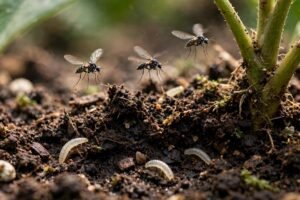
One quick check before you do anything: make sure you’re not fighting the wrong bug. Fruit flies hang around bananas and kitchen drains, not your monstera. Shore flies look similar but they’re stockier — and they don’t damage plants. Ten seconds of ID now saves you weeks of wrong treatment later.
Why Your Plants Have Them
Damp soil. That’s the whole story, really. Gnat eggs and larvae need constant moisture — if the top of your potting mix never dries out, you’ve built them a nursery with free room service.
And they had to come from somewhere. Almost always one of two places: they were already in the bag of potting mix (yes, even sealed, brand-name stuff), or they rode in on a new plant. Your warm house then does the rest — no winter die-off like outdoors, so generations just pile on top of each other. Three gnats in October becomes three hundred by December. That’s why it feels endless.
The 4-Step Plan That Actually Works
Order matters. Each step hits a different life stage. Skip one and the cycle continues.
Step 1: Dry Out the Top Soil (Start Here)
Let the top 1–2 inches dry out completely between waterings. And I mean completely — then empty the saucer, because a pot sitting in a puddle defeats the whole thing.

This is the single biggest lever you have. Dry soil kills eggs outright and tells egg-laying females to go elsewhere. Mild infestation? This alone can finish it. Bonus: most houseplants prefer this anyway. Permanently soggy soil rots roots whether gnats are involved or not.
Step 2: Trap the Adults
Adults live roughly a week. Doesn’t sound like much — except each female lays hundreds of eggs in that week. Catch them and you strangle the next generation.
Two options, both cheap:
Yellow sticky traps. Jam them into the pot near the soil surface. Hideous. Extremely effective. Swap them out every few days.

The vinegar jar. Apple cider vinegar, a few tablespoons, plus one drop of dish soap in a small jar. Stretch plastic wrap over the top, poke holes in it with a toothpick. Gnats crawl in for the smell and can’t climb back out. Park it next to your worst-hit plants.
Be clear-eyed about this step, though: traps manage adults. They don’t touch what’s breeding in the soil. That’s next.
Step 3: Kill the Larvae (Don’t Skip This)
Everything above is preamble. This is where infestations die.
Mosquito Bits (BTI). The most reliable weapon available. BTI is a naturally occurring soil bacterium that kills fly larvae specifically — harmless to your plants, your pets, and you. Soak the bits in your watering can per the label directions, water your plants with it. Do this with every watering for 3–4 weeks straight. Why so long? You’re catching each new wave of larvae as they hatch. Stop early and the survivors restart the whole circus.
Hydrogen peroxide drench. The quick knockdown. Mix 1 part regular 3% hydrogen peroxide with 4 parts water, and water it through once the topsoil has dried. It kills larvae on contact. One round is usually enough — think of it as the opening punch, not the whole fight.
Sand barrier. A 1-inch layer of coarse horticultural sand across the soil surface, kept dry. Females can’t easily dig through it to lay eggs. Coarse is the key word — fine beach sand packs down, holds moisture, and achieves the exact opposite of what you want.
Step 4: The Nuclear Option — Repot
Done all of the above for a month and still living in a gnat cloud? Then the potting mix itself is compromised. Pull the plant out, rinse the old soil gently off the roots — keep them wet while you work, roots hate drying out — scrub the pot clean, and repot into fresh, sterile mix.
Drastic? Sure. But it’s faster than spending another two months losing a war of attrition against a bad bag of soil.
4 Mistakes That Keep Them Coming Back
1. Only killing the flying adults. Spraying the air feels productive. It accomplishes nothing. Larvae. It’s always the larvae.
2. Treating once, then stopping. The life cycle runs 3–4 weeks with overlapping generations. One heroic weekend of treatment, then back to old habits, just buys you a second wave. A month of consistency, minimum.
3. Keeping soil wet “to help the plant recover.” I get the instinct. But a stressed plant sitting in soggy soil is precisely the habitat gnats want. Let it dry.
4. Missing the source plant. One infested newcomer can seed a whole room. Gnats are weak fliers, but “weak” still covers the distance between your windowsill and your bookshelf. Check everything nearby.
Keeping Them Away for Good
A few habits and you’ll rarely see them again:
Bottom-water when you can — or at least water carefully so the surface isn’t perpetually soaked. Use a genuinely well-draining mix, and stop putting small plants in giant pots (all that extra wet soil with no roots drinking from it is prime real estate). Quarantine new arrivals for a week or two and actually inspect the soil before they join the collection. And be picky about potting mix — the cheap, heavy stuff that stays soggy for days is a gnat magnet. Opened a bag to find it damp and musty? Sterilize it or buy better.
How Long Until They’re Gone?
Here’s where most people quit, so let’s be straight: three to six weeks. The traps will thin the adults within days and you’ll feel like you’re winning — and you are. But eggs already in the soil haven’t hatched yet, and you’re playing against a 3-to-4-week life cycle. Still swarmed after six weeks? Something slipped. Nine times out of ten it’s one of two things: the soil never truly dried out, or there’s a plant you forgot to treat.
Of all the bugs that can move into your houseplants, gnats are the most beatable. No expensive gear, no sacrificed plants. Dry the soil. Trap the adults. Kill the larvae. Four consistent weeks. That’s the entire game.