
Here’s the problem with most low light plant lists online. They’re optimistic in a way that leads directly to dead plants and confused people blaming themselves for something that was never going to work in the first place. “Low light” on a lot of plant blogs means “tolerates moderate indirect light near a window” — which sounds like the same thing as a dim corner but isn’t, not even close.
So before anything else, it’s worth getting honest about what low light actually means. Because that distinction is the whole difference between a plant that holds on for years and one that slowly declines while you keep wondering what you’re doing wrong.
The Part Most Articles Skip
Low light — real low light — is somewhere between 100 and 250 foot-candles. That’s a unit of light measurement, and the most accurate way to know whether a spot qualifies is a light meter. They’re inexpensive, and if you care about houseplants at all, having one removes a lot of the guesswork that leads to wasted money on plants that were never going to work in a particular spot.
Phone apps that measure light exist too. They’re imprecise but give a rough idea. The no-tech version: stand in the spot and look for a window. Direct line of sight to a window, within about 10 feet — probably low light territory. No visible window without turning around, or window is across the room and small — that’s likely no light, not low light. That distinction matters because no light is a problem that no plant on this list fully solves, just delays.
A windowless bathroom isn’t low light. A corner on the far side of a room from one small window isn’t either. Plants in these spots will survive for a while — sometimes impressively long — but they’re slowly declining rather than living, which eventually becomes obvious in ways that are hard to reverse.
The warning sign to watch for is etiolation — stems stretching, the gap between leaves getting longer and longer, the whole plant leaning toward whatever light source it can detect. When that starts happening, the spot is too dark regardless of what the plant is or what anyone told you about it.
The Plants That Genuinely Work
Pothos (Epipremnum aureum)
This one sits in its own category. Most plants described as low-light tolerant need at least 100 foot-candles to maintain themselves. Pothos can manage on around 50, which is genuinely unusual and the main reason it shows up in offices, coffee shops, and every dim corner of every shared apartment anyone has ever lived in.
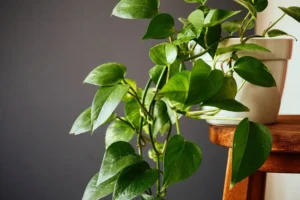
Go for solid dark green varieties rather than variegated ones. Marble Queen, despite being widely available and widely recommended, needs more light than people assume — the white portions of variegated leaves have less chlorophyll, which means the plant has to work harder to photosynthesize and needs more light to do it. Golden Pothos, regular green Pothos — these are the ones that actually hold up in dim conditions.
Well-draining soil with perlite, water when the top half of the soil is dry, let it trail or give it a totem to climb. That’s basically it.
Heartleaf Philodendron (Philodendron hederaceum)
In the wild this plant grows in tree shade — genuinely adapted to low light rather than just tolerating it as a second choice. Which means that unlike most houseplants, giving it too much direct sun actually causes problems. Leaves burn, color fades. The dark corner your other plants struggled in might genuinely suit this one.
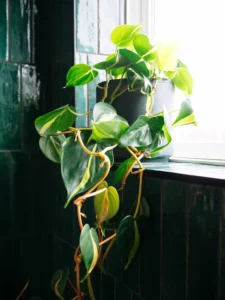
Stick to the original glossy green or the darker velvety Micans variety for low light conditions. Variegated cultivars want more. Water only when the soil is nearly completely dry — these are more drought tolerant than their appearance suggests and much more vulnerable to overwatering than to underwatering.
Sansevieria / Snake Plant (Dracaena sp.)
The reputation for indestructibility is mostly earned. Snake plants prefer bright light and will grow much faster in it, but they tolerate genuinely dim conditions with a composure most plants don’t have. In low light they just slow down — sometimes dramatically — which for people who don’t want a fast-growing plant is actually convenient.
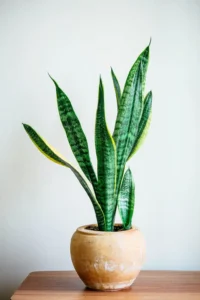
Gritty, fast-draining soil. Completely dry between watering, and in a dim spot that might mean a month or more between drinks. Overwatering kills far more snake plants than low light does — worth keeping that hierarchy in mind.
Dragon Tree (Dracaena)
Same family, similar resilience. A dragon tree placed up to 10 feet from a window can hold on for years in the same spot without obvious distress, though it won’t grow quickly. The darker-leaved varieties handle dimmer conditions better — Dracaena fragrans ‘Compacta’ is a particularly good choice specifically for low-light rooms. Water when the soil is about halfway dry, which in a dim location takes considerably longer than people expect.
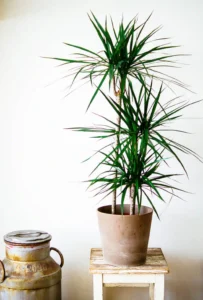
Side note: lucky bamboo — the kind sold in glass vases and gift shops everywhere — is actually a Dracaena. Same tolerance, same basic care logic.
Cast Iron Plant (Aspidistra eliator)
The name is accurate. This plant has been a houseplant staple since the Victorian era for one reason: it handles conditions that finish off almost anything else. Low light, temperature swings, low humidity, irregular watering, general neglect. It shrugs at all of it.
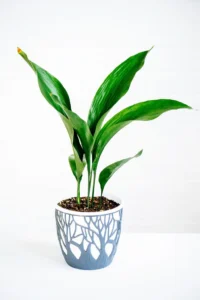
Native to Japan, it produces tall sword-shaped glossy leaves and grows large over time. For a dim corner that needs something with genuine visual presence — not a trailing vine but an actual statement plant — this is probably the most reliable choice on the list. Well-draining soil, water when halfway dry, leave it largely alone. It doesn’t demand much attention in exchange for being genuinely indestructible.
Satin Pothos (Scindapsus pictus)
The name is misleading — it’s not a Pothos, not a Philodendron, despite being called both at various points. It’s a Scindapsus, native to Asian jungles, and the patterned velvety leaves are distinctive enough that it’s recognizable once you’ve seen it.
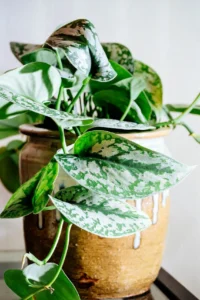
Its low-light tolerance wasn’t its most famous quality, but it’s proven itself in practice. In a genuinely dark spot it grows slowly — we’re talking three leaves over two years in one documented case — but it stays healthy rather than stretching or declining, which is the real measure of whether a low-light plant is actually working. Care mirrors true Pothos: well-draining soil, water when halfway dry, trail or climb depending on preference.
ZZ Plant (Zamioculcas zamiifolia)
Shows up in malls and hotel lobbies and corporate offices because it handles artificial low-light environments with the same equanimity it handles everything else. Those thick rhizomes store water the way a succulent’s leaves do, which makes it drought tolerant in a way that pairs usefully with low-light conditions — less light means less water needed, and this plant is built to go long between drinks.
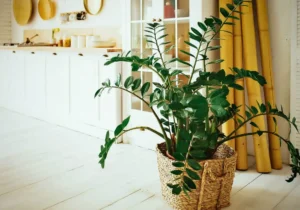
Long stems, shiny almost feathery leaves, genuine visual interest for a dark corner. Let the soil dry halfway in summer, more fully in winter. The main way ZZ plants die is overwatering causing the rhizomes to rot — not low light, not neglect in the usual sense, just too much water too often.
Peace Lily (Spathiphyllum)
Divisive among houseplant people. Some find them easy; others can’t keep them alive despite doing everything apparently right. The usual culprit is humidity — these come from warm humid forest floors and respond badly to the dry air of centrally heated homes, especially in winter. In a dim spot with decent ambient humidity they actually do well, and they’ll produce occasional flowers without strong light, which is genuinely unusual.
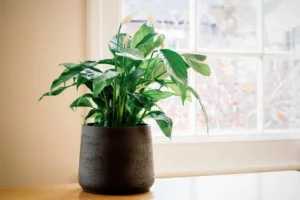
Regular potting soil with perlite, consistent watering without overdoing it. They droop visibly when they’re thirsty, which makes them readable once you’ve seen it happen once, and they recover quickly after watering. The drooping looks alarming the first few times. It’s just how they communicate.
Chinese Evergreen (Aglaonema)
The colored varieties — pink, orange, white, silver — are beautiful but need more light to hold their intensity. For genuinely dim spots, the green varieties are the ones that work: ‘Maria’, ‘Silver Bay’, ‘Silver Queen’, commutatum. These handle lower light without fading and without drama.
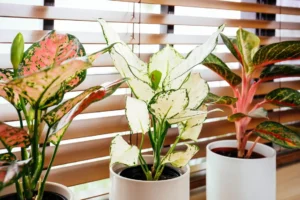
Well-draining soil, let it dry about halfway before watering. Undemanding, consistent, handles dim conditions without complaining about it.
Spider Plant (Chlorophytum comosum)
Least low-light tolerant plant on this list — worth being honest about that. They’d genuinely prefer more light, and in truly dim conditions they survive rather than thrive. But they’re resilient enough that most hold on without dying, just without growing much, and the striped grassy leaves and trailing babies have a charm that’s hard to replicate with other plants.
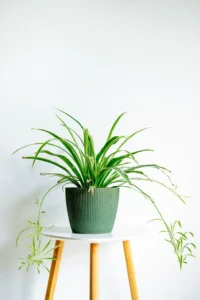
One specific care note: spider plants are sensitive to mineral buildup from tap water, which shows up as brown leaf tips. Using distilled water or flushing the pot thoroughly every few weeks helps. It’s not a major issue but it’s the one thing that tends to confuse people who are otherwise caring for them well.
What Changes About Care in Low Light
This matters more than the plant choice in some ways.
Water less — much less — and check the soil every single time rather than going by a schedule. A plant in a dim spot uses a fraction of the water it would use near a bright window. The soil stays moist longer, the plant processes nutrients more slowly, and overwatering becomes the primary risk. Finger in the soil before every watering, not once a week regardless.
Fertilize less, or dilute more. Low-light plants grow slowly and their roots aren’t taking up nutrients at normal rates. Adding fertilizer on a regular schedule just builds up salts in the soil without the plant being able to use what’s being added, which eventually damages roots. Half strength, less often, is the safer approach.
Check for pests more regularly. Plants in dim spots are under more background stress than plants in bright light, and stressed plants attract problems. Spider mites especially tend to show up in low-light houseplants. Catching them early is straightforward; catching them once they’ve established is considerably more work.
And finally: accept slower growth as the outcome, not as a sign that something is wrong. A plant maintaining itself — looking healthy, producing the occasional new leaf, not stretching or declining — in a genuinely low-light spot is succeeding. That’s the reasonable expectation. Rapid growth in a dim corner isn’t realistic for any plant, and chasing it by adding fertilizer or more water usually makes things worse rather than better.