
It’s a bit alarming, honestly — your tomato plant looked fine a few days ago, and now the leaves are rolling up, folding inward, or twisting weirdly at the edges. Before you panic and assume disease, take a breath and actually look at what’s going on.
Curling can come from a handful of different things: heat, dry soil, aphids, a virus, even chemical drift from somewhere nearby. The good news is each of these tends to leave its own set of clues, so once you know what to check for, figuring it out isn’t too hard.
1. The Heat Might Just Be Getting to It
Tomatoes like warmth, but there’s a limit. When it gets really hot, the plant will sometimes roll or curl its leaves inward — it’s basically trying to cut down on water loss through the foliage.
This can show up almost overnight, especially if a cool stretch is suddenly followed by a heatwave.
Before doing anything, check the rest of the plant. Leaves still green? Stems look fine? Still flowering or setting fruit? If yes, heat stress is probably your answer — and there’s no need to start pruning off leaves just because they’ve curled.
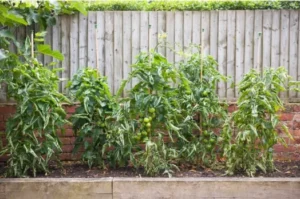
What to do: Don’t guess about watering — check the soil first, and if it’s dry, water deeply. Mulch around the base helps too. If you’re growing in containers, keep a closer eye, since pots dry out way faster than garden beds.
2. Your Watering Might Be Inconsistent
Tomatoes really don’t like big swings between bone-dry and soaking wet soil. Let it dry out completely, then drench it — that’s stressful for the plant, and it happens faster than most people expect once the weather heats up.
If the curling started after a few dry days, don’t just eyeball the surface — push a finger a couple inches into the soil. It can look dry on top while there’s still moisture underneath.
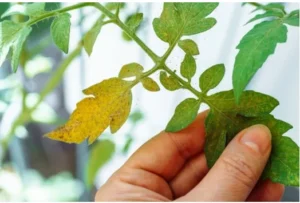
Water thoroughly when it’s genuinely dry, and check container plants more often, especially ones sitting in full sun.
3. It Could Just Be Physiological Leaf Roll
This one’s actually kind of reassuring once you understand it — it’s not an infection at all. The plant’s leaves curl upward and inward, sometimes almost forming a tube shape, and they might feel a bit thicker or leathery.
Environmental stress (shifting temperatures, moisture changes) usually triggers it. If everything else about the plant looks normal, you probably don’t need to treat anything.
Check the new growth, the flowers, the fruit. If those all look okay, just keep watering consistently and leave it alone — the leaves may stay curled, but the plant keeps growing fine regardless.
4. Check for Aphids
If it’s specifically the newest leaves curling, get in close and look. Aphids love tender new growth, and a bad infestation can leave those leaves distorted, stunted, curled.
They’re small and easy to miss, so flip the leaves over and check around the stems and growing tips. A sticky residue on the foliage (honeydew, which aphids leave behind while feeding) is another giveaway.
A few aphids? Not a big deal — ladybugs and lacewings will often handle them naturally. Bigger infestation, go with something labeled safe for edible crops and follow the instructions.
5. Could Be a Virus
Curling alone doesn’t scream “virus” — but combine it with yellowing, mottled leaves, distorted growth, smaller foliage, or odd-looking fruit, and it starts looking more likely.
Step back and look at the whole plant. Is new growth off? Is it shrinking instead of growing? Are nearby plants showing the same thing?
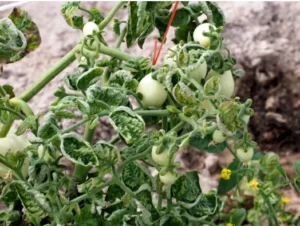
If symptoms are severe and spreading, it’s worth getting the plant looked at by a local extension office or diagnostic lab rather than throwing random treatments at it.
6. Tomato Yellow Leaf Curl Virus Specifically
This one has a pretty distinct combo: small, upward-curling leaves, yellowing along the margins or between veins, and often badly stunted young plants. Flowering and fruiting usually take a hit too.
Whiteflies spread this virus, so if you’re seeing these symptoms, check for whiteflies before blaming the weather.
Starting with healthy transplants, picking resistant varieties where possible, controlling weeds, and watching for whiteflies all help lower the risk.
7. Herbicide Drift
Easy to overlook because there’s often no pest to find. Tomatoes are sensitive to certain herbicides, and even a small amount drifting over from a nearby spray job can twist up the new growth.
Look for unusually narrow, cupped, or distorted leaves, with veins standing out more than usual — it can honestly look a lot like a viral infection.
Think back: was there a lawn treatment nearby? Was it windy that day? Did the damage start on the side of the plant closest to the sprayed area? These details matter.
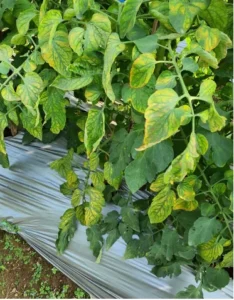
There’s no real fix for herbicide damage once it’s happened — just prevent further exposure and keep the plant well-watered while you wait for new growth to come in clean.
8. Other Pests Beyond Aphids
Thrips and a few other insects can also distort young leaves. Worth spending a few minutes checking the newest growth, undersides of leaves, and stems before assuming it’s aphids by default.
You don’t have to ID the exact bug right away — just confirm whether something’s actually there and whether the damage lines up with where it’s feeding.
9. Root Problems Can Show Up in the Leaves
Not every leaf issue starts at the leaf. Damaged roots, compacted or poorly draining soil, inconsistent watering, even over-fertilizing — all of this can stress the plant in ways that eventually show up as curling foliage.
So don’t jump straight to adding fertilizer. Look at the bigger picture — growth rate, leaf color, flowering, fruit development. If multiple things seem off, a soil test will tell you more than guessing.
Quick Diagnosis Guide
- Leaves curled but still green: check weather and soil moisture — heat stress, watering issues, or physiological roll are the likely culprits.
- Newest leaves curling, insects visible: look closely for aphids or other pests.
- Curling plus yellow/mottled leaves: lean toward a viral cause, especially if growth has slowed.
- New growth badly twisted: think virus or herbicide exposure.
- Started during a heatwave: environmental stress, particularly if the rest of the plant looks healthy.
- Multiple plants affected: look for what they have in common — same water source, same weather, same pest exposure.
Reducing the Risk Going Forward
You can’t eliminate every possible cause, but a few habits go a long way:
- Even moisture — don’t let soil go bone dry, but don’t waterlog it either. Water based on actual soil condition, not a schedule.
- Mulch — helps retain moisture and buffers soil temperature swings. Straw or shredded leaves work well; just keep it a little away from the main stem.
- Spacing — good airflow matters, and it’s easier to spot problems early when plants aren’t crammed together.
- Regular checks — you don’t need a daily inspection, just glance at new growth and flip a few leaves every couple of days. Catching a small pest problem early beats fighting a big one later.
- Herbicide caution — read labels, watch for wind and drift conditions.
- Resistant varieties — if a disease is common in your area, look for resistant cultivars as part of your overall strategy.
When to Actually Worry
A few curled leaves here and there usually isn’t a big deal, especially if the plant’s still growing, flowering, and fruiting normally.
Pay closer attention if you’re seeing several of these together: bad yellowing, mottled leaves, stunted growth, heavily distorted new leaves, weird-looking fruit, a lot of insects, curling that keeps spreading, or multiple plants showing the same symptoms.
If nothing adds up, take pictures — the whole plant, the affected leaves, and their undersides — and send them to a local extension service or plant lab.
Bottom Line
Curled tomato leaves don’t automatically mean something’s wrong. Sometimes it really is just a hot afternoon or soil that dried out more than you realized. Other times you’ll flip a leaf and find aphids hiding there. And when curling shows up alongside yellowing, stunted growth, or seriously distorted new leaves, that’s when it’s worth taking more seriously.
Don’t treat every curled leaf the same way — look at the whole plant, check the soil, think about recent weather, and consider what’s changed nearby. Once you match the clue to the cause, the next step usually becomes obvious.