
Most houseplant problems trace back to two things — too much water, or not enough light. The water one gets talked about constantly. The light one gets talked around, mostly because the terms people use to describe it are genuinely confusing and often mean different things depending on who’s writing.
“Bright indirect light” in particular is one of those phrases that sounds specific and isn’t. Does a skylight count? A bathroom window? The far end of a living room with south-facing windows? These could all technically be described as “indirect light” and they’re nowhere near the same thing for a plant. Understanding what these terms actually mean — in measurable terms, not vibes — changes how you place plants and why some spots work while others don’t.
What Happens When a Plant Doesn’t Get Enough Light
This part matters because most people attribute low-light problems to something else — overwatering, wrong soil, some disease — when the root issue is just that the plant is starving for light.
Leaves start growing further apart, giving the plant a sparse stretched look. Stems become weak and leggy, reaching toward any available light source in a process called etiolation. Leaves turn pale and yellowish and eventually drop. The soil stays moist for unusually long periods because the plant isn’t metabolizing fast enough to use the water it has — which increases rot risk significantly. The plant becomes more susceptible to pests and diseases because it’s under constant low-level stress.
The honest version of this: indoors, light is always in short supply for plants. Almost without exception, any houseplant you own would prefer more light than your home offers. Even a “high light” indoor spot is dim compared to what the same plant experiences outdoors. The difference between plants in different light conditions indoors is the difference between thriving, surviving, and slowly declining — and that last category is where a lot of houseplants quietly end up.
Modern windows make this worse than people expect. Special coatings that reduce UV and heat transmission also cut the visible light that passes through, meaning even a large unobstructed window delivers less than it appears to.
How to Actually Measure Light
The most reliable method is a light meter. They’re inexpensive, hold it where the plant will sit, and it gives you a reading in foot-candles — one lumen per square foot, which is the standard unit for measuring indoor light. This removes the guesswork that leads to buying a plant for a spot it can’t survive in.
Phone apps that measure light exist and are imprecise enough to be roughly useful but not reliable for precise placement decisions. The visual method — does the spot have a direct sightline to a window, how far away is it, how big is the window — gives a workable approximation if you don’t want to buy a meter.
The Four Light Categories and What They Actually Mean
Very Low Light — 50 to 100 foot-candles
This is one step above complete darkness. The room has windows, but a plant sitting in a very low light spot can’t see the sky from where it is. Practically: a plant against the same wall as a window, so light doesn’t fall on it at all. More than 15 feet from a large window. More than 5 feet from a small bathroom-style window.
The plant options here are extremely limited. Pothos — specifically solid green or golden Pothos, not variegated varieties — is essentially the only common houseplant with a real track record of surviving at this level. Even then, growth will be minimal and conditions for error are very narrow. Overwatering in very low light kills plants quickly because they’re using almost no water and the soil stays wet for a long time.
Beginners should skip this category entirely. The margin for error is too small and the outcome is usually a slow plant death that’s confusing because it takes long enough that the connection to light isn’t obvious.
Low Light — 100 to 250 foot-candles
This is where most homes actually land, which is part of why so many houseplants struggle indoors without people understanding why. To human eyes, a low light spot looks perfectly reasonable — not dim, just normal. But for a plant trying to photosynthesize enough to sustain itself, it’s genuinely challenging. Only plants that have specifically adapted to shade in their natural environment hold up here.
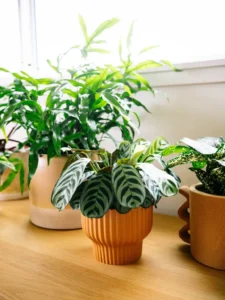
Low light examples: tiny windows, north-facing windows in cloudy climates, windows that look out onto a wall or courtyard, or being more than 5 feet from a window that doesn’t receive direct sun.
The list of plants that genuinely thrive here rather than merely survive is short, which is why most “low light plant” lists online are misleading — they include plants that actually need medium light, which sets people up for failure.
Medium Light / Bright Indirect Light — 250 to 1,000 foot-candles
This is where things get genuinely livable for a wide range of tropical houseplants. A medium light spot allows a plant to see the sky clearly, even if it’s not in direct sun. West and east-facing windows, south-facing windows with overhangs or trees partially blocking them, 10 or more feet from an unobstructed south-facing window, offices with bright fluorescent lighting plus windows — these all fall here.
The 500+ foot-candle end of this range is where most understory tropicals don’t just survive but actually grow well. This is the category where the interesting plants live — Monsteras, Hoyas, Orchids, Alocasias, Philodendrons. The term “bright indirect light” on a plant tag almost always means this category specifically: clear view of the sky, no direct sun hitting the leaves.
High Light — 1,000+ foot-candles
Getting close to an outdoor feel. Plants here receive direct sun for several hours daily and have an unobstructed view of a large section of sky. Large south-facing windows, glass doors, big skylights, covered patios — these qualify.
Almost every houseplant would prefer to live here, with the exception of true extreme-sun lovers like most cacti and succulents that need the intensity of being fully outdoors. Understory tropicals do well up to around 1,500 foot-candles; tougher plants handle 2,000 or more.
One practical note: moving a plant from low to high light should happen gradually over a few weeks to prevent leaf burn. The transition from low to medium can happen in one move, but jumping straight into strong sun after dim conditions damages leaves.
The Part-Time Sun Problem
Light levels vary throughout the day and across seasons in ways that complicate placement decisions. A window that gets strong morning sun from 8am to 11am and then sits in shade the rest of the day isn’t a high-light spot — it’s medium light at best. The way to think about it: more than six hours of direct sun means high light. Two to three hours of morning or evening sun means medium. Never any direct sun, regardless of how bright the room feels to a person sitting in it, means low light.
This matters practically because plants at the cusp of their light requirements often do fine in summer and struggle in winter when day length shortens and sun angle changes. A spot that worked in June might not work in December, and moving plants seasonally is a real option rather than a resignation.
When a Plant Is Already Struggling From Low Light
The recoverable cases outnumber the lost causes significantly. Unless a plant has completely rotted or gone completely desiccated, most can come back.
Move it to medium light — not high light immediately, just medium — and water sparingly while it recovers. A light-starved plant already has compromised roots and wet soil stays wet even longer without photosynthesis happening at a normal rate, so the rot risk is high during recovery. Give it a few weeks in better light before resuming a normal watering rhythm.
Plants that have lost all their leaves but still have green stems often resprout once conditions improve. The temptation to throw them out at that point is understandable and usually premature.
The Practical Upshot
The single most useful thing someone can do before buying a houseplant is measure the light in the spot where it will actually live — not an optimistic spot, the real spot. A light meter takes about 10 seconds to use and costs less than most plants. Matching plant to actual light level before purchase prevents the most common failure mode in houseplant keeping, which isn’t bad care — it’s putting a plant somewhere it was never going to work regardless of how well it was cared for.