
Zoë Kravitz stands at a rare intersection in modern pop culture: she is at once a Hollywood insider and a creative outsider, a fashion icon who resists convention, and a performer whose quiet intensity often speaks louder than spectacle. Born into rock-and-roll royalty yet determined to carve her own path, Kravitz has spent her career resisting easy labels. Actress, musician, producer, director, and cultural tastemaker, she represents a new kind of stardom—one rooted less in excess and more in authenticity.
Over the past two decades, Zoë Kravitz has evolved from a promising young actress navigating the weight of a famous last name into a defining voice of her generation. Her work reflects a deep commitment to storytelling, self-expression, and challenging norms surrounding race, gender, and beauty. In an industry that often rewards conformity, Kravitz’s power lies in her refusal to fit neatly into any one box.
Early Life: Growing Up Between Worlds
Zoë Isabella Kravitz was born on December 1, 1988, in Los Angeles, California. Her parents—musician Lenny Kravitz and actress Lisa Bonet—were cultural icons in their own right. From the moment she was born, Zoë was surrounded by creativity, art, and celebrity. Yet her upbringing was far from conventional Hollywood luxury.
After her parents separated when she was young, Zoë split her time between Los Angeles and New York City. She was exposed to radically different environments: the laid-back, sun-drenched West Coast and the gritty, fast-paced energy of New York. These contrasting worlds shaped her perspective early on, giving her a sense of adaptability and independence that would later define her career.
Despite her parents’ fame, Kravitz has often spoken about feeling like an outsider during her childhood. As a biracial child navigating predominantly white spaces, she struggled with identity, belonging, and self-esteem. These early experiences would later inform her creative choices, particularly her attraction to complex, marginalized, or misunderstood characters.
Stepping Into Acting: Finding Her Own Voice
Zoë Kravitz made her acting debut in 2007 with a small role in No Reservations. While the role was modest, it marked the beginning of a career defined by deliberate, often unconventional choices. Rather than chasing immediate stardom, Kravitz gravitated toward independent films and supporting roles that allowed her to hone her craft.
Her early performances in films such as The Brave One (2007) and Birds of America (2008) demonstrated a quiet, introspective presence. Unlike many young actresses seeking attention through dramatic flourishes, Kravitz leaned into restraint. Her performances often conveyed emotion through subtlety—a glance, a pause, a shift in posture.
This understated approach would become one of her trademarks. Directors and audiences alike began to recognize her ability to bring depth to characters without overstatement, a skill that set her apart in an era dominated by spectacle-driven performances.
Breakthrough Roles and Mainstream Recognition
Kravitz’s wider breakthrough came in the early 2010s, as she balanced indie credibility with large-scale productions. She appeared in X-Men: First Class (2011) as Angel Salvadore, marking her entry into the superhero genre. While the role itself was limited, it introduced her to a global audience.
Her participation in the Divergent series further expanded her mainstream profile. Playing Christina, a bold and confident member of the Dauntless faction, Kravitz brought warmth and humor to a franchise otherwise focused on dystopian seriousness. The role allowed her to showcase charisma while maintaining her grounded, relatable energy.
At the same time, she continued to pursue smaller, riskier projects. Films like Dope (2015) and Mad Max: Fury Road (2015) demonstrated her range and willingness to challenge expectations. In Mad Max, her portrayal of Toast the Knowing was physical, intense, and stripped of glamour—a deliberate contrast to traditional Hollywood depictions of women.
Television Success: Big Little Lies and Beyond
If film established Zoë Kravitz as a serious actress, television elevated her to a new level of critical acclaim. In 2017, she joined the cast of HBO’s Big Little Lies as Bonnie Carlson, a yoga instructor married into a wealthy, troubled family.
Bonnie was a deceptively quiet character, but Kravitz infused her with emotional depth and moral clarity. As the series progressed, Bonnie emerged as the emotional and ethical center of the show. Kravitz’s performance—subtle, restrained, and deeply human—earned widespread praise and solidified her reputation as a powerhouse performer.
Her success on television continued with High Fidelity (2020), in which she starred as Rob Brooks, a gender-swapped reimagining of the original male character. Kravitz not only starred in the series but also served as an executive producer. The show allowed her to explore themes of love, vulnerability, music, and emotional growth with humor and honesty.
Becoming Catwoman: Reinventing an Icon
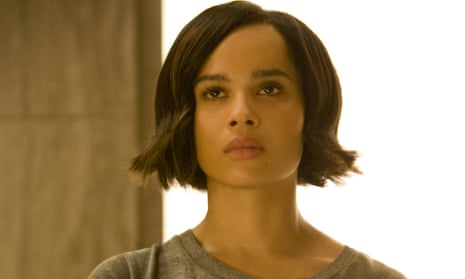
One of the most significant milestones in Zoë Kravitz’s career came in 2022, when she portrayed Selina Kyle/Catwoman in The Batman. The role carried immense cultural weight, as Catwoman is one of the most iconic female characters in comic book history.
Kravitz approached the role with nuance and intention. Rather than playing Catwoman as a purely seductive figure, she emphasized Selina Kyle’s vulnerability, moral complexity, and emotional intelligence. Her performance was grounded, modern, and deeply human.
The casting itself was meaningful. As a biracial actress stepping into a role traditionally portrayed by white women, Kravitz brought a fresh perspective that resonated with contemporary audiences. Her Catwoman was not just a love interest or antihero—she was a woman navigating power, trauma, and autonomy in a corrupt world.
Music and Creative Expression
Beyond acting, Zoë Kravitz has maintained a parallel career in music. She fronts the band Lolawolf, which blends electronic, R&B, and experimental sounds. Much like her acting work, her music resists easy categorization.
Lolawolf’s albums explore themes of desire, alienation, freedom, and emotional vulnerability. Kravitz’s vocals—soft yet commanding—mirror her screen presence. She uses music as another medium for storytelling, often drawing from personal experiences and emotional states.
Music also plays a significant role in her identity and creative process. Growing up around musicians and artists, Kravitz views creativity as fluid rather than compartmentalized. For her, acting, music, fashion, and directing are interconnected expressions of the same artistic impulse.
Fashion Icon and Cultural Influence
Zoë Kravitz has become one of the most influential style figures of her generation. Her fashion choices—minimalist, androgynous, and effortlessly cool—have made her a favorite of designers and fashion editors alike.
She has served as a muse for major fashion houses and frequently appears on best-dressed lists, not because she follows trends, but because she sets them. Her style reflects her personality: confident, understated, and unapologetically individual.
More importantly, Kravitz uses fashion as a form of self-expression rather than performance. She challenges traditional notions of femininity, embracing both softness and edge. In doing so, she has become a symbol of modern beauty—one that values authenticity over perfection.
Behind the Camera: Directing and Producing
In recent years, Zoë Kravitz has expanded her creative influence behind the camera. Her directorial debut with Blink Twice marked a significant step in her evolution as a storyteller. Moving into directing allowed her to shape narratives from a broader perspective, particularly stories centered on women and power dynamics.
As a producer, she has been vocal about the importance of representation and ethical storytelling. She seeks projects that challenge harmful stereotypes and provide space for marginalized voices. This commitment reflects her broader philosophy: art should not only entertain but also provoke thought and empathy.
Identity, Advocacy, and Personal Growth
Throughout her career, Kravitz has been candid about issues of identity, mental health, and self-acceptance. She has spoken openly about navigating fame, racial identity, and the pressure of public scrutiny. Her honesty resonates with audiences who see her not as an untouchable celebrity, but as a deeply human figure.
Rather than positioning herself as an activist in the traditional sense, Kravitz integrates advocacy into her work. By choosing complex roles, supporting inclusive projects, and speaking thoughtfully about social issues, she uses her platform with intention and care.
Legacy and Future Directions
Zoë Kravitz’s career is still unfolding, yet her impact is already undeniable. She represents a generation of artists who prioritize integrity over image and creativity over convention. Her work challenges audiences to look beyond surface-level narratives and embrace complexity.
As she continues to evolve as an actress, musician, director, and producer, Kravitz shows no signs of slowing down—or conforming. Her future projects promise deeper exploration of storytelling, identity, and human connection.