
Moon Jeong-hee stands as one of South Korea’s most respected actresses, known for her emotional depth, intellectual approach to acting, and fearless portrayal of complex women. Over the course of her career, she has built a reputation not through celebrity spectacle, but through consistent excellence, thoughtful role selection, and an unwavering commitment to her craft. Whether appearing in intense psychological thrillers, intimate melodramas, or socially reflective films, Moon Jeong-hee has demonstrated an extraordinary ability to inhabit characters with authenticity and nuance.
This article explores Moon Jeong-hee’s life, career, artistic philosophy, and lasting influence on Korean cinema and television, highlighting why she is regarded as one of the most quietly powerful performers of her generation.
Early Life and Education
Moon Jeong-hee was born on January 12, 1976, in South Korea. From an early age, she showed a strong interest in the arts, particularly dance and performance. Unlike many actors who enter the industry through modeling or talent agencies, Moon’s path was grounded in academic study and disciplined artistic training.
She pursued higher education in dance, studying Korean traditional dance as well as contemporary movement. This background played a crucial role in shaping her acting style. Dance taught her body control, spatial awareness, and emotional expression without words—skills that would later become defining traits of her screen performances.
Moon Jeong-hee continued her academic journey by studying at graduate level, deepening her understanding of performance as both a physical and psychological discipline. Her strong educational foundation set her apart in an industry often focused on appearance and instant popularity.
Entry into the Entertainment Industry
Moon Jeong-hee began her career in the late 1990s, initially appearing in theater productions and smaller screen roles. Rather than seeking immediate stardom, she focused on honing her skills and learning from diverse performance environments. Theater, in particular, allowed her to explore character development in depth and build emotional stamina as an actor.
Her early film roles were often supporting characters, but even in limited screen time, Moon displayed a remarkable presence. Directors and critics began to notice her ability to convey complex emotions subtly—through posture, silence, and restrained dialogue.
This period of gradual growth laid the foundation for the more challenging and high-profile roles that would follow.
Breakthrough and Critical Recognition
Moon Jeong-hee’s major breakthrough came through films that demanded emotional courage and psychological realism. One of the most significant turning points in her career was her role in the film “Hide and Seek” (2013), a thriller in which she portrayed a deeply troubled character shaped by fear, trauma, and obsession.
Her performance in the film earned widespread acclaim and led to major awards recognition, including Best Supporting Actress honors. Critics praised her for transforming what could have been a conventional role into a haunting and unforgettable portrayal.
Rather than capitalizing on her success by choosing safe or glamorous roles, Moon continued to select challenging projects that explored human vulnerability, moral ambiguity, and emotional tension.
Acting Style and Artistic Philosophy
Moon Jeong-hee’s acting style is often described as internalized, disciplined, and emotionally precise. She avoids exaggerated expressions, instead relying on subtle shifts in tone, gaze, and physicality. This approach allows her performances to feel natural and deeply human.
Several key elements define her artistic philosophy:
1. Physical Expression
Her background in dance gives her exceptional control over movement. Even when standing still, her posture communicates emotion. She understands how bodies carry memory, pain, and intention.
2. Psychological Preparation
Moon is known for thoroughly researching her roles, often studying real-life behaviors, emotional patterns, and social contexts related to her characters. She treats acting as a form of investigation rather than imitation.
3. Respect for Silence
Many of Moon’s most powerful moments occur without dialogue. She uses silence as a narrative tool, allowing viewers to engage emotionally rather than being guided by explicit explanations.
4. Commitment to Truth
Rather than trying to appear likable or dramatic, she prioritizes honesty. This has led her to portray morally complex or uncomfortable characters with empathy and restraint.
Notable Film Roles
Hide and Seek (2013)
This psychological thriller marked a defining moment in Moon’s career. Her portrayal of a woman driven by desperation and fear showcased her ability to sustain emotional intensity over long periods. The role required both physical endurance and emotional precision, and Moon delivered a performance that lingered long after the film ended.
Deranged (2012)
In this disaster thriller, Moon played a supporting role that grounded the story emotionally. While the film focused on large-scale crisis, her character provided a human perspective, emphasizing family, fear, and moral responsibility.
Pandora (2016)
Set against the backdrop of a nuclear disaster, Pandora allowed Moon to explore themes of survival, sacrifice, and collective trauma. Her performance reflected the quiet strength of ordinary people facing extraordinary circumstances.
Independent and Artistic Films
Moon Jeong-hee has also participated in smaller, independent films where character study takes precedence over plot. These projects further established her reputation as an actor willing to take risks and explore unconventional narratives.
Television Work and Broader Appeal
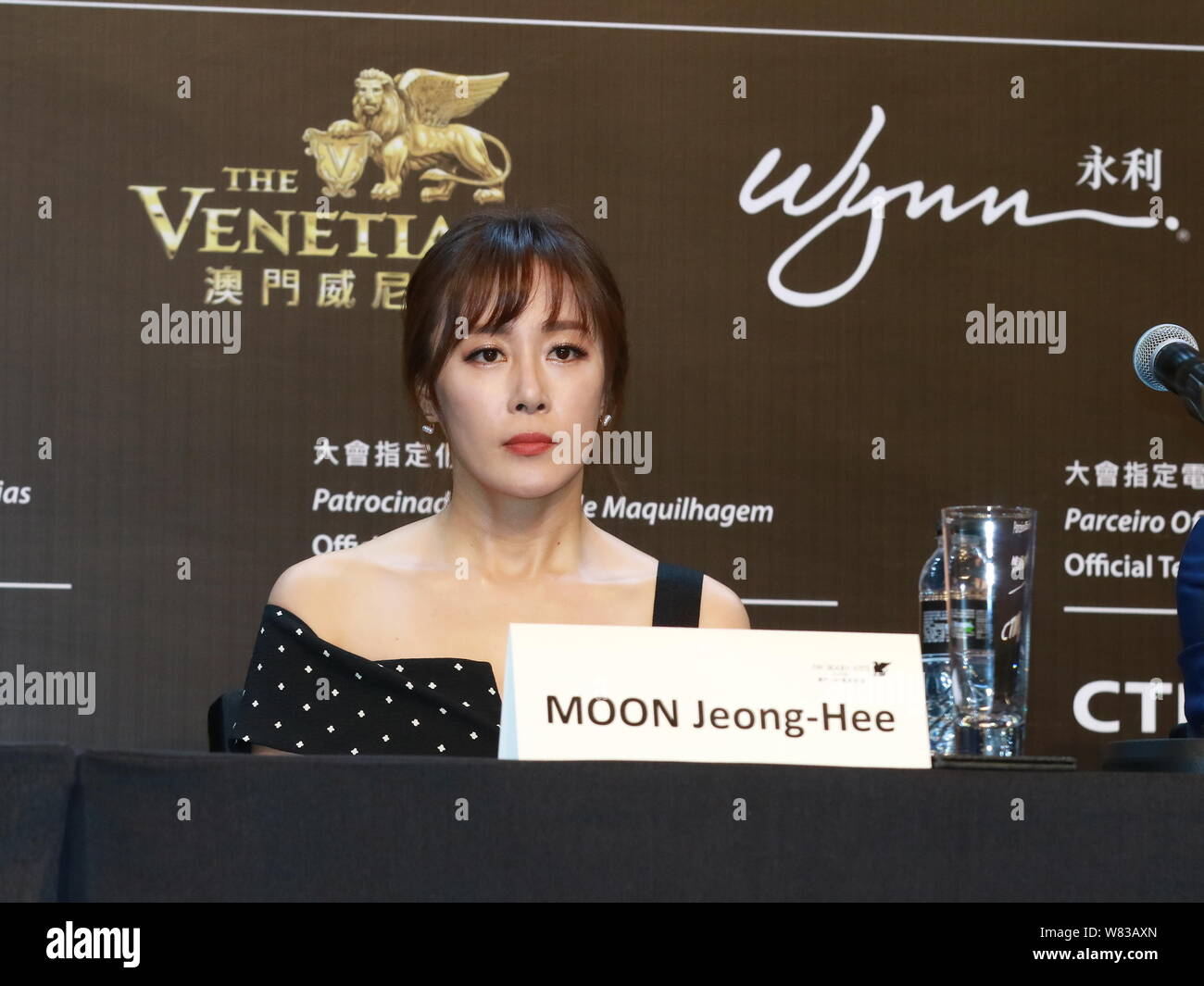
While Moon Jeong-hee is especially respected in film circles, her television work has also contributed significantly to her popularity and influence. On television, she often portrays intelligent, emotionally layered women navigating family, social expectations, and personal identity.
Her television performances tend to emphasize realism rather than melodrama. Viewers often describe her characters as relatable, grounded, and emotionally sincere—qualities that resonate strongly with mature audiences.
By moving fluidly between film and television, Moon has maintained both artistic credibility and public visibility without compromising her values.
Portrayal of Women and Social Themes
One of the most important aspects of Moon Jeong-hee’s career is her contribution to the portrayal of women in Korean media. Rather than reinforcing stereotypes, she often chooses roles that challenge traditional narratives.
Her characters may be flawed, conflicted, or morally ambiguous, but they are always fully realized individuals rather than symbolic figures. Through these portrayals, Moon has helped broaden the range of female representation in Korean cinema.
She frequently appears in stories that address:
- Family dynamics and generational conflict
- Psychological trauma and recovery
- Social inequality and responsibility
- Identity, autonomy, and emotional resilience
By engaging with these themes, Moon Jeong-hee has positioned herself as not just an entertainer, but also a thoughtful participant in cultural dialogue.
Awards and Industry Recognition
Over the years, Moon Jeong-hee has received numerous nominations and awards for her performances. While awards are not the defining measure of her success, they reflect the industry’s recognition of her talent and dedication.
She is particularly respected among directors and fellow actors, many of whom describe her as disciplined, collaborative, and deeply committed to the storytelling process.
Influence and Legacy
Moon Jeong-hee’s influence extends beyond individual performances. She represents a model of longevity and integrity in an industry often driven by trends and instant fame. Her career demonstrates that sustained excellence, thoughtful role selection, and continuous learning can lead to long-term respect and relevance.
Younger actors frequently cite performers like Moon as examples of how to balance artistic ambition with professional discipline. Her journey shows that it is possible to build a meaningful career without sacrificing personal values or creative integrity.
Personal Life and Public Image
Moon Jeong-hee maintains a relatively private personal life, choosing to let her work speak for itself. This discretion has contributed to her image as a serious artist rather than a celebrity defined by publicity.
Her public appearances and interviews often focus on her thoughts about acting, art, and social responsibility rather than personal details. This approach aligns with her overall philosophy of humility and professionalism.
Conclusion
Moon Jeong-hee is an actress whose career embodies depth, restraint, and quiet strength. Through decades of thoughtful performances, she has earned a place among South Korea’s most respected artists. Her work challenges audiences to look beyond surface-level storytelling and engage with the emotional and psychological realities of her characters.