
Josh Brolin’s career is a testament to endurance, reinvention, and the slow-burning power of craft. Unlike many Hollywood stars who burst onto the scene and fade just as quickly, Brolin’s ascent has been gradual, layered, and hard-earned. From a turbulent youth and early typecasting to becoming one of the most formidable character actors of his generation, Brolin has carved a path defined by grit, risk-taking, and artistic fearlessness. Today, he stands as a unique figure in contemporary cinema—equally credible in superhero epics, gritty westerns, intimate dramas, and dark comedies.
Early Life: A Complicated Beginning
Josh James Brolin was born on February 12, 1968, in Santa Monica, California. He is the son of actor James Brolin, a well-known television and film star, and Jane Cameron Agee, a wildlife activist. While his father’s success might suggest an easy entry into Hollywood, Brolin’s childhood was anything but stable.
After his parents’ divorce, Josh spent much of his youth away from the glamour of Los Angeles, growing up on a ranch in California. His relationship with authority was strained, and he later described himself as rebellious and self-destructive during his teenage years. He became involved with punk rock culture and, at one point, associated with a group he described as a gang. Violence, substance abuse, and brushes with the law were part of his reality—experiences that would later inform the raw intensity he brought to many of his performances.
These early struggles shaped Brolin’s worldview and gave him a lived-in authenticity that would become one of his defining traits as an actor.
Breaking In: The Goonies and Early Fame
Josh Brolin’s first major acting role came in 1985 with The Goonies, the beloved adventure film produced by Steven Spielberg. As Brandon “Brand” Walsh, Brolin played the responsible older brother in a cast of young actors who would go on to define a generation. The film was a commercial and cultural success, instantly making Brolin a recognizable face.
Yet early fame proved to be a double-edged sword. While The Goonies opened doors, it also led to typecasting. Brolin found himself struggling to land meaningful roles in the years that followed. He took parts in television shows such as The Young Riders, but he grew increasingly dissatisfied with the material and with himself.
Disillusioned by Hollywood and battling personal demons, Brolin briefly stepped away from acting altogether. He explored other creative outlets, including painting, and seriously questioned whether acting was the path he wanted to pursue.
Reinvention and Return to Acting
Brolin’s return to acting in the late 1990s and early 2000s marked the beginning of his true artistic evolution. Older, wiser, and more disciplined, he approached roles with renewed focus. Rather than chasing stardom, he sought depth and challenge.
His breakthrough reinvention came with No Country for Old Men (2007), directed by Joel and Ethan Coen. As Llewelyn Moss, a working-class welder who stumbles upon a drug deal gone wrong, Brolin delivered a performance defined by quiet intelligence, moral ambiguity, and simmering tension. Though Javier Bardem’s terrifying Anton Chigurh dominated awards conversations, Brolin’s grounded performance was essential to the film’s power.
The film’s success reintroduced Brolin to Hollywood as a serious actor capable of anchoring complex narratives. At nearly 40 years old, he had finally arrived.
Establishing Himself as a Powerhouse Actor
Following No Country for Old Men, Brolin experienced one of the most remarkable career resurgences in modern cinema. He began working with elite directors and selecting roles that challenged conventional heroism.
In Milk (2008), Brolin portrayed Dan White, the troubled politician who assassinated Harvey Milk. The role demanded emotional restraint and psychological depth, and Brolin approached it without sentimentality. His performance earned him an Academy Award nomination for Best Supporting Actor and solidified his reputation as a fearless character actor.
He followed this with W. (2008), Oliver Stone’s biographical drama about George W. Bush, in which Brolin played the former U.S. president. Rather than relying on caricature, Brolin humanized Bush, emphasizing vulnerability, insecurity, and ambition. The performance was widely praised for its nuance and restraint, especially given the political sensitivities surrounding the subject.
Westerns, Grit, and Masculinity
Brolin has often gravitated toward roles that explore masculinity in its most fragile and violent forms. Westerns, in particular, became a natural fit for his rugged presence and internalized intensity.
In True Grit (2010), he played Tom Chaney, the outlaw whose crime sets the story in motion. Though not the film’s central character, Brolin imbued the role with menace and realism. Later, in Sicario (2015), he portrayed Matt Graver, a morally ambiguous government operative navigating the murky ethics of the war on drugs. His performance was chilling precisely because of its calm pragmatism.
These roles reinforced Brolin’s ability to convey danger without exaggeration—a man who doesn’t need to raise his voice to command fear.
Blockbusters and Global Stardom: Thanos and Beyond
Despite his indie credibility, Brolin did not shy away from blockbuster cinema. In fact, he redefined what a blockbuster villain could be.
His portrayal of Thanos in the Marvel Cinematic Universe (Avengers: Infinity War and Avengers: Endgame) stands as one of the most ambitious performances in franchise film history. Through motion capture and voice work, Brolin brought gravitas, sorrow, and philosophical conviction to a CGI character. Thanos was not merely a villain; he was a tragic figure driven by a warped sense of balance and destiny.
The performance elevated the films and proved that even in a digital landscape, acting craft remains paramount. Brolin managed to dominate the screen while technically never appearing on it in the traditional sense.
He further embraced blockbuster roles in films like Deadpool 2 (2018), where he played Cable. Unlike the solemn Thanos, Cable showcased Brolin’s sharp comedic timing and self-awareness, revealing another layer of his versatility.
Personal Life and Self-Reflection
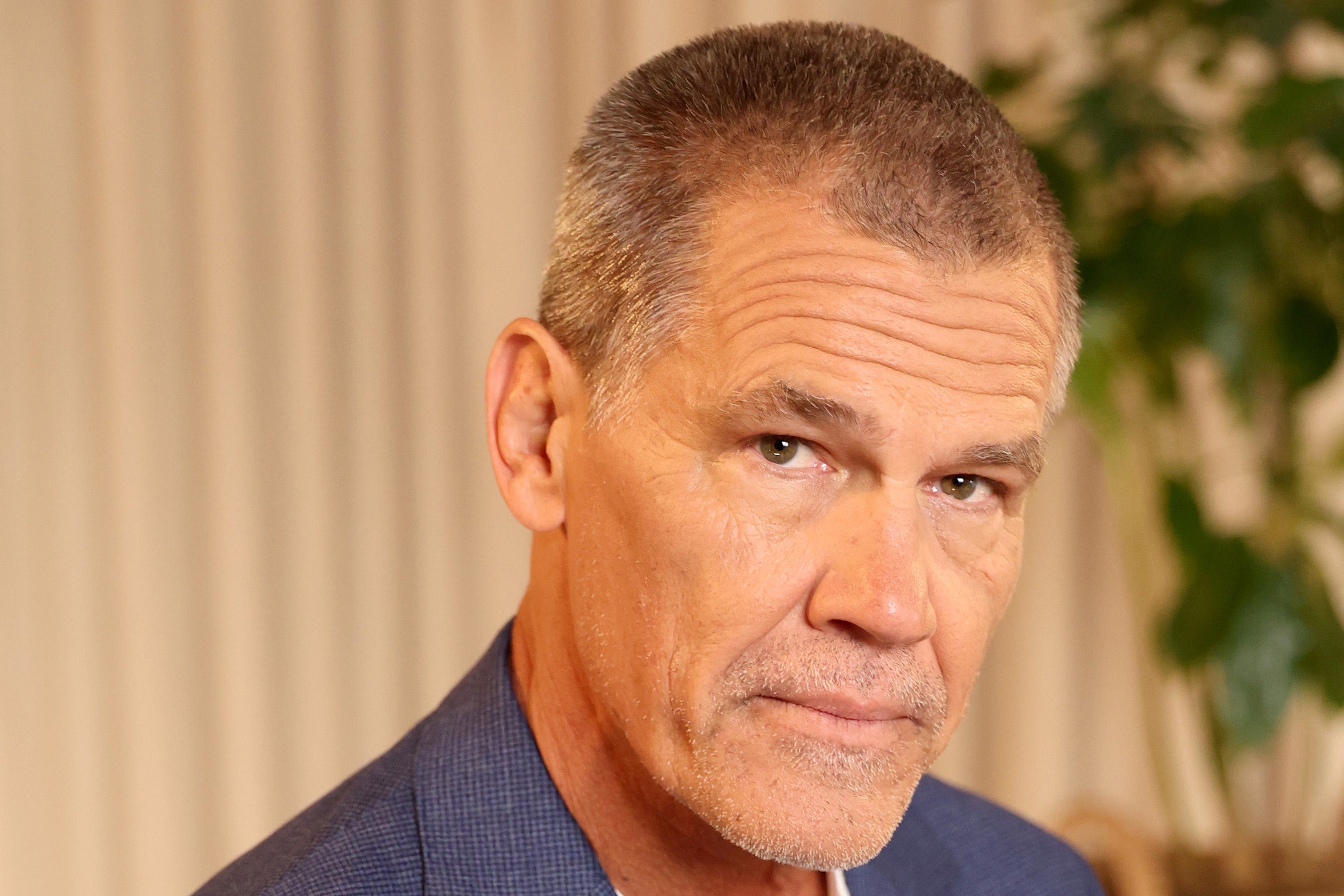
Brolin’s personal life has been marked by highs and lows, much like his career. He has been open about his past struggles with addiction and his commitment to sobriety. These experiences have deeply influenced his approach to life and art, fostering humility and self-discipline.
He has been married multiple times and is a father, roles he takes seriously. In recent years, Brolin has spoken candidly about aging, responsibility, and the importance of gratitude—perspectives that often surface in his later performances.
Outside of acting, Brolin is an accomplished artist, working in painting and writing. His creative pursuits reflect a restless intellect and a desire for expression beyond the confines of film.
Acting Style and Legacy
Josh Brolin’s acting style is defined by restraint, physical presence, and emotional honesty. He rarely overplays a moment, preferring subtle shifts in posture, tone, and silence. His performances often suggest that the most important things a character feels are left unsaid.
What sets Brolin apart is his willingness to embrace imperfection. He plays men who fail, compromise, and struggle with their own moral limitations. In doing so, he reflects a more honest version of masculinity—one shaped by consequence rather than fantasy.
As Hollywood continues to evolve, Brolin occupies a rare space: a character actor with leading-man gravitas, a blockbuster star with indie credibility, and an artist who values longevity over spectacle.
Conclusion: A Career Still Unfolding
Josh Brolin’s story is not one of overnight success, but of persistence, growth, and reinvention. From a troubled youth and early fame to critical acclaim and global stardom, his journey reflects the complexity of the characters he portrays.
Now in the prime of his career, Brolin shows no signs of slowing down. If anything, his performances continue to deepen, enriched by experience and self-awareness. In an industry obsessed with youth and immediacy, Josh Brolin stands as proof that true artistic power often arrives with time.