
Renting a small apartment comes with its own set of frustrations, and the living room is usually where most of them show up. You can’t knock down walls. You can’t always repaint. The layout is what it is. And somehow you’re supposed to make it feel like home.
Living Room Decor Ideas
The good news and this is genuinely good news, not the fake-positive kind is that most small living rooms aren’t struggling because of their size. They’re struggling because of a handful of fixable things. Wrong furniture proportions. Bad lighting. No clear focal point. Texture missing entirely. Fix those things and the square footage stops mattering quite as much.
Here’s what actually helps.
1. Warm Light Colors on the Big Surfaces
Walls and large furniture pieces set the visual temperature of the whole room before anything else gets a say. Keep them in warm light tones creamy white, soft beige, greige and the room reflects whatever natural light comes in rather than soaking it up.
This isn’t about making the room look bigger in the way design advice usually promises. It’s about making it feel less heavy. There’s a difference between a room that’s technically small and one that feels tight, and this is a lot of what creates that gap.
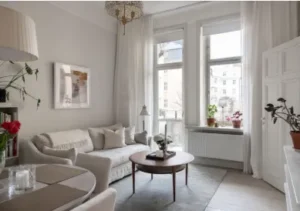
Adding texture through cushions, throws, rugs, and natural materials keeps the light palette from reading as plain. The colors stay quiet. The materials do the talking.
2. The Sofa Is Probably Too Big
Not always. But often. The oversized sectional that looked right in the showroom becomes the room in a small apartment everything else has to work around it, traffic flow gets awkward, and nothing else fits quite right.
A two or three-seat sofa with raised legs and modest arm depth almost always works better in a compact space. Visible legs matter more than people expect when light can pass underneath the furniture, the floor reads as larger than it actually is. It’s subtle and it’s real.
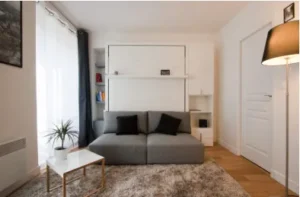
Simple silhouette. Not too deep. Not too wide. The sofa that fits the room you have rather than the room you wish you had.
3. Whatever You Do, Don’t Block the Windows
Natural light is the most valuable thing a small apartment living room can have. Heavy curtains that block it in exchange for a draped look are trading something real for something decorative, and it almost never feels worth it once you’re living with the result.
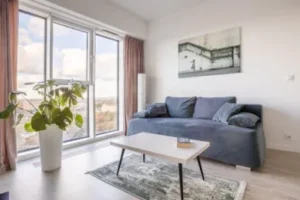
Sheer linen panels hung at ceiling height not window height, ceiling height filter light rather than cutting it off and make the windows appear larger than they actually are. The extra few inches of rod above the window frame costs nothing and changes the proportions of the whole wall.
4. The Rug Goes Bigger Than Feels Right
This one gets ignored constantly. A small rug in the center of a small room feels logical less overwhelming, more proportionate. What it actually produces is furniture that floats around a rug that isn’t anchoring anything, and the whole arrangement looks unresolved in a way that’s hard to fix with anything else.
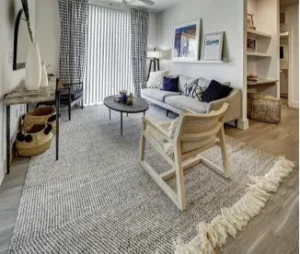
Front legs of the sofa and chairs on the rug. That’s the standard. It makes the seating area feel like a defined zone within the room rather than objects placed near each other. The room reads as more considered for it.
5. The Walls Go Higher Than Eye Level
Floor space runs out fast. Vertical space in most small apartments is completely ignored.
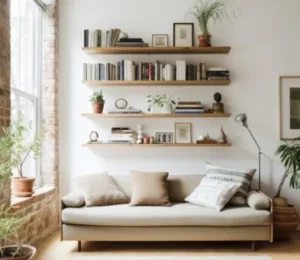
Floating shelves installed above standard furniture height, a tall bookcase that reaches toward the ceiling rather than stopping at shoulder level, artwork hung in a vertical orientation that gives the eye somewhere to travel upward these additions use the room’s full height rather than just the lower half of it. The ceiling feels further away. The room feels taller. Neither of these things requires any structural change.
6. Wood Makes Modern Apartments Feel Human
There’s something specific that natural wood brings to a room that painted surfaces and upholstered pieces don’t manage a warmth that comes from the material itself rather than its color. The grain, the slight variation in tone, the way it responds differently to morning light versus lamplight.
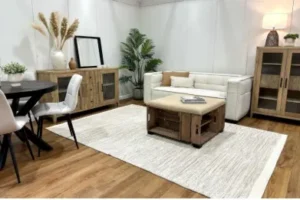
An oak side table, a walnut coffee table, a light pine shelving unit any of these changes the texture of the whole room. Pair them with soft fabrics, linen cushions, a woven basket or two, and the room develops a layered quality that feels genuinely relaxed rather than assembled.
7.Bring Plants Into Empty Corners
Empty corners in small living rooms sit in an awkward middle ground not quite part of the room’s logic, not quite wasted space either. Filling them with another piece of furniture usually makes things feel more crowded rather than better used.
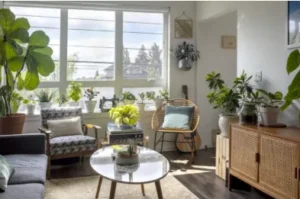
A large indoor plant handles this differently. A monstera, a fiddle leaf fig, a snake plant grown tall these fill a corner visually without contributing to the cluttered feeling that furniture in the same spot would. The organic quality of a plant does something for a room that objects don’t. It makes the space feel inhabited rather than just decorated.
8. Three Things on the Coffee Table. That’s It.
The coffee table in a small living room tends to become wherever things land when they don’t have anywhere else to go. Remotes, mail, a book from three weeks ago, something someone put down meaning to deal with it. The table stops being part of the room’s design and becomes a surface the rest of the room has to work around.
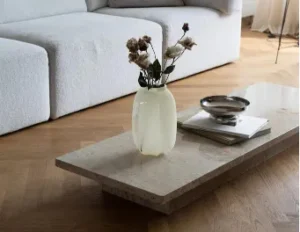
Three items. A small stack of books being actually read. Something with a little height a small plant or a simple vase. A candle. Everything else finds a home somewhere that isn’t the coffee table. The empty space around those three things is a design decision, not a gap to fill.
9. One Ceiling Light Is Not Enough
Most apartments come with one overhead fixture per room. It illuminates everything evenly, which sounds adequate and produces an atmosphere that’s flat and slightly harsh functional, not welcoming.
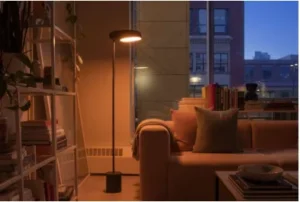
A floor lamp beside the sofa. A table lamp on a side surface. The overhead light on a dimmer if possible. Multiple sources at different heights produce the kind of layered light that changes how a room feels in the evening pools of warmth rather than blanket illumination. 2700K warm white bulbs throughout. The difference between that and 4000K cool white is significant and costs nothing extra to specify.
10.Use Mirrors to Expand the Space
A mirror reflecting another wall reflects a wall. A mirror positioned across from a window reflects natural light back into the room — the space feels brighter, the perceived depth increases, and there’s a sense of a second light source that the room didn’t have before.
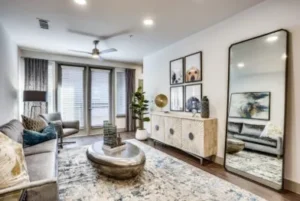
Larger works better. A full-length mirror leaning against the wall facing the main window, or a wide mirror hung at eye level across from where the light comes in. This is the application where mirrors actually do what people hope mirrors will do in small rooms.
11.Hide Everyday Clutter
A small living room with genuinely good furniture and genuinely good lighting still feels uncomfortable when everyday clutter is constantly visible. This doesn’t get solved by styling around it it gets solved by creating places for things to actually go.
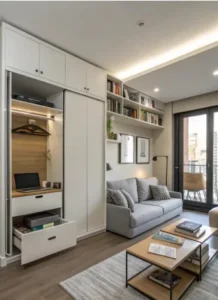
Storage ottomans that open. Lift-top coffee tables with internal compartments. Woven baskets that function as bins while looking intentional. A console near the door with a drawer. These address the functional problem that prevents the room from ever settling into itself regardless of what else is done to it.
12.Layer Different Textures
A room with a quiet neutral palette and no variation in surface quality reads as flat rather than calm there’s not enough for the eye to settle on and the room starts to feel generic regardless of how carefully things were chosen.
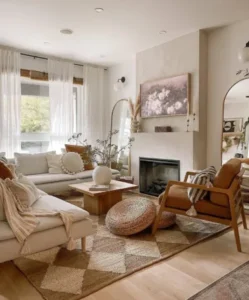
Boucle on a chair. A chunky throw over the sofa arm. Linen cushions with visible weave. A jute rug with natural fiber irregularity. Woven baskets. Ceramic vases with slight glaze variation. These materials add visual interest through surface quality rather than color and the combination reads as layered and considered in a way that no single color choice achieves.
13. One Wall Leads. The Others Follow.
Small rooms with multiple things competing for attention gallery wall here, statement mirror there, large plant doing its own thing in the corner feel restless. The eye moves around without landing anywhere and the room reads as busy rather than styled.
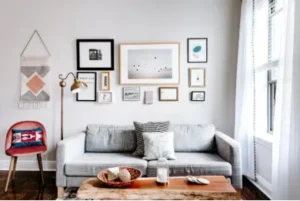
Choosing one wall or one arrangement as the room’s clear focal point and letting everything else be quieter gives the space a hierarchy. It doesn’t need to be dramatic a large piece of artwork above the sofa, a media unit with some architecture to it, a gallery arrangement that takes up the whole wall rather than part of it. Once one thing leads, the rest of the decisions get considerably easier.
14. Empty Space Is Not a Failure
The instinct in a small room is to fill every corner and surface empty space reads as unfinished, as if something is missing. This instinct produces rooms that feel crowded regardless of how good each individual piece is.
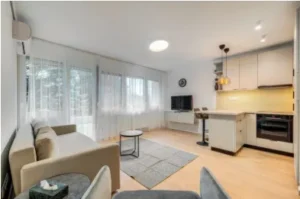
A corner left clear. A wall without anything on it. A stretch of floor without furniture. These give the room visual rest, which is what separates a small space that feels calm from one that feels tight. Removing one piece of furniture from a small living room often improves it more immediately and more noticeably than adding anything new.
15. Personal Things Over Pretty Things
A living room put together all at once from new purchases looks finished and feels slightly like nobody lives in it yet. The most welcoming apartments look like they developed like objects arrived gradually from different places and different times.
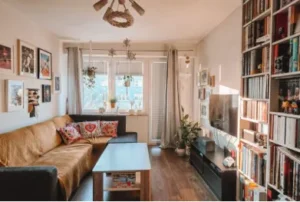
Framed photographs of things that actually happened. Books that are being read. A ceramic piece from a market. Something inherited. These details make a room feel genuinely inhabited rather than styled for viewing. They don’t need to be significant. They just need to mean something which is different from being decorative.
16. A Consistent Palette Across Everything
Four or five competing accent colors in a small living room create visual noise that reads as chaos regardless of how attractive each color is individually. The room feels more hectic than its size explains.
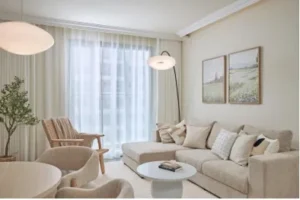
Two or three complementary tones used consistently across cushions, rug, artwork, and smaller accessories produce a room that feels cohesive. The palette constraint isn’t limiting it’s what creates the sense of everything belonging together rather than competing for the same space.
17. Comfort First. Appearance Second. Always.
The living room in a small apartment is where daily life actually happens. Sitting with a laptop on the sofa. Watching something after dinner. Having someone over and talking longer than expected. Reading when there’s nowhere else to be.
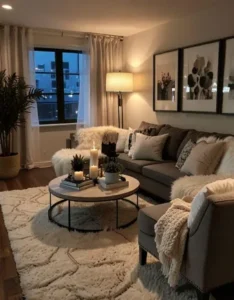
A sofa that looks right but isn’t comfortable for ninety minutes fails this room. Lighting that’s atmospheric in photos but makes reading uncomfortable fails this room. The pieces that last in a small apartment are the ones that are genuinely good at being used every day and those choices, made with actual use in mind, tend to look right too. Comfort and aesthetics in a small living room aren’t competing priorities. Getting one right usually gets you most of the way to the other.
Final Thoughts
A small apartment living room doesn’t need more square footage to feel good. It needs a sofa that fits, light that works at different times of day, texture that gives the eye something to settle on, storage that deals with everyday clutter honestly, and a layout that makes sense for how the room actually gets used.
Start with whatever on this list feels most obviously wrong about your current room. Fix that one thing and see what it reveals about what needs attention next. The best version of the space is usually a few decisions away — not a renovation.