
I used to think you needed a decent-sized room for an indoor garden to look like anything worth showing off. Not true. A single window. A leftover corner nobody uses. Even that awkward triangle under the stairs. All of it works, once you stop planning it like you’re furnishing a house you don’t actually have.
Here’s what holds up in real small spaces — apartments, studios, the kind of place where every square foot is already spoken for.
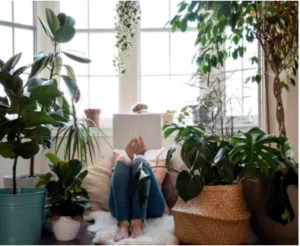
1. Layer a Window Corner by Height
Pick whichever window gets the most light. Tall plant in back. Medium ones on a stool in front of that. Something trailing right at the edge so it spills over. Sounds obvious, and honestly it kind of is — but do it properly and one window can carry the whole room.
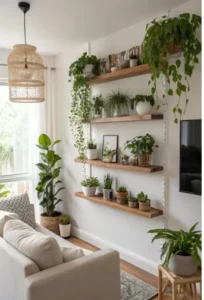
2. Install Floating Shelves for Vertical Growing
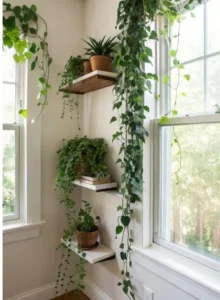
Floor’s full? Stop fighting it. Go up instead. A couple of floating shelves with pothos or a small fern spilling off the edge gets you height without touching the floor at all. Easiest fix on this list, probably.
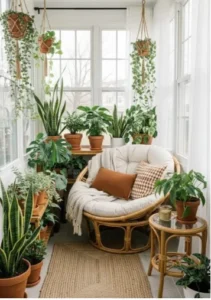
3. Dedicate a Sunroom or Nook to Plants Only
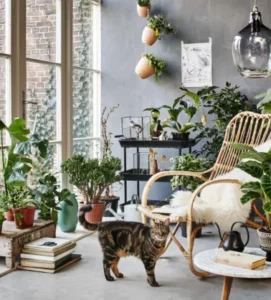
Not everyone has one of these. If you do, though — don’t split it between plants and storage boxes you never open. Commit. One bigger plant, a few smaller ones scattered around it, a rattan chair maybe. That’s it. It works precisely because nothing’s competing for your attention.
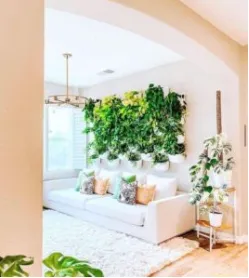
4. Build a Plant Wall Behind Your Seating
Skip the framed print behind the sofa. A few wall planters back there do more work — decoration, sure, but also just plants, actually growing. Costs nothing in floor space either way, which is the whole point of half this list.
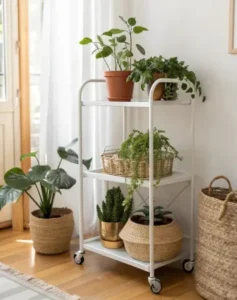
5. Get a Rolling Plant Cart
Underrated, this one. Wheels mean you can chase the sun through the apartment instead of stranding a plant in one half-lit spot all day. Push it out of the way when you need the floor back. Herbs and succulents especially like this setup.
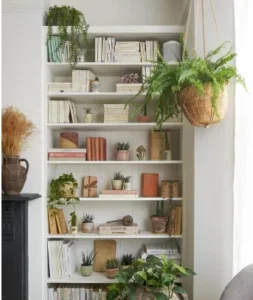
6. Turn a Bookshelf Into a Plant Display
A vine tucked between books. A tiny terrarium on one shelf. Doesn’t take much — just enough that the shelf stops reading as storage and starts looking like someone actually lives there.
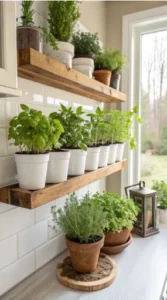
7. Grow a Kitchen Herb Garden on the Windowsill
Basil, mint, parsley, thyme. Matching pots, right where you cook. Out of everything on this list, this is the one that actually pays you back — you’re not just looking at it, you’re using it.
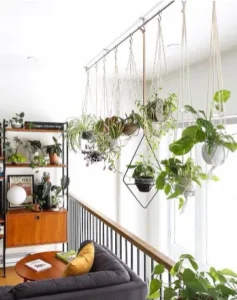
8. Hang Plants From the Ceiling
Macramé hanger, ceiling hook, done. Surfaces stay clear. Nobody mentions the other part though — hanging plants pull the eye up, and that makes a low ceiling feel a little less like it’s sitting on your head.
9. Keep the Bedroom Minimal and Green
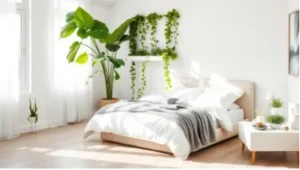
Doesn’t take many plants in here. Two, maybe three. Snake plant, ZZ plant, a peace lily, neutral pots. That’s enough to shift the whole mood of the room without turning it into something you have to maintain like a job.
10. Use a Leaning Plant Ladder
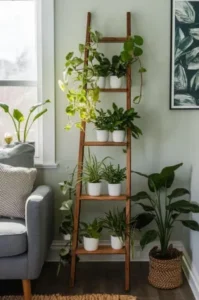
Leans on the wall instead of standing free, so it barely registers as “furniture” — but you still get several rungs to fill. Different plant, different pot, each level. Looks put-together for almost no work.
11. Create a Cozy Reading Nook
One chair. Some soft light. Plants on two sides, not four — four is too much. Small table for a book and a mug. That’s the whole formula, there isn’t more to it than that.
12. Fill Corners With Compact Shelving
Corners sit empty in basically every small home. Feels awkward to put anything there, so people just… don’t. A slim corner shelf with peperomia or fittonia fixes that in maybe twenty minutes.
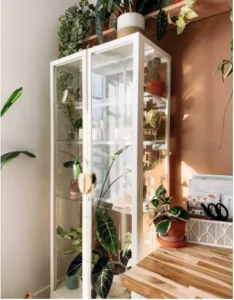
13. Try a Small Glass Cabinet Greenhouse
Glass traps humidity. Matters if you’re keeping ferns or calathea alive, since they’re fussier about moisture than most houseplants people grow. And it tends to be the first thing visitors notice, for what that’s worth.
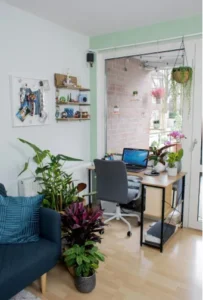
14. Add Plants to Your Home Office
Small desk, small room, gets sterile fast. A couple of easy plants near the monitor and it stops feeling like a cubicle. Not much effort for how much it changes.
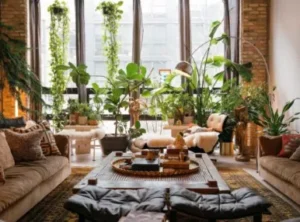
15. Go Boho With Texture and Layers
Rattan, a jute rug, plants hanging next to plants on the floor. Busier than a minimal room, no question — but it also hides square footage better than anything else here. Reads as cozy. Not cramped. There’s a difference.
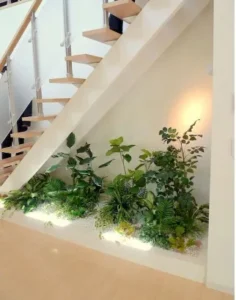
16. Reclaim the Space Under the Stairs
Odds are this space is doing nothing for you right now. A shelf, maybe a small grow light if the sun doesn’t reach, a few shade-tolerant plants. Dead space becomes the thing people actually bring up when they visit.
17. Stick to One Pot Color for a Monochrome Look
All white. All terracotta. All black. Doesn’t matter which — pick one and don’t mix. Small decision, but it’s the difference between “curated” and “happened by accident.”
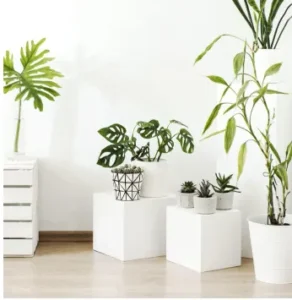
18. Add a Small Indoor Water Feature
Doesn’t need to be big at all. A shallow bowl, one aquatic plant. Adds movement, a bit of calm, and takes up next to no space.
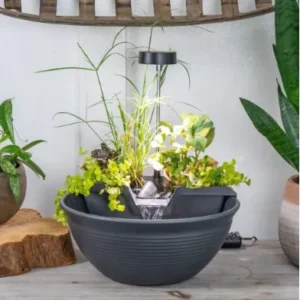
19. Use Sheer Curtains for a Conservatory Feel
Gauzy curtains soften harsh midday sun without shutting the light out completely. Cheapest item on this whole list for getting that airy, greenhouse feeling — and you don’t touch a single wall to do it.
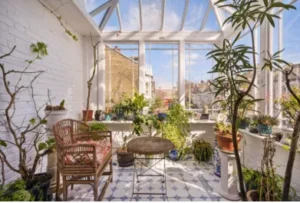
The Light Part (Skip This at Your Own Risk)
Most of these ideas fail for one dull reason. Wrong plant, wrong light. Not effort, not space — just a plant that needed sun sitting in a corner that never sees any.
- Bright direct light (south-facing window): succulents, cacti, herbs
- Bright indirect light: pothos, monstera, rubber plant
- Medium light: philodendron, peace lily, calathea
- Low light: snake plant, ZZ plant, cast iron plant
Where Most People Go Wrong
Overwatering, first and foremost. Kills more houseplants than anything else on this list combined, and it’s worse in low light because the soil just holds onto moisture longer than anyone expects.
Then there’s drainage — or the lack of it. A pot with no holes traps water at the root no matter how careful you think you’re being. Plain nursery pot with holes, tucked inside a nicer cover. That’s the fix, and it’s not complicated.
Crowding is another one. Zero gap between leaves cuts off airflow, and that’s basically a welcome mat for pests and mold.
And humidity-lovers — ferns, calathea — will just sulk in a dry apartment unless you group them or slide a pebble tray under the pots. They’re not being difficult on purpose. They just need the moisture.
Things People Actually Ask
How many plants can a small apartment really fit? Depends on light more than size, honestly. A bright window can carry 8 to 10 plants layered together. A dim room might only manage 2 or 3 low-light ones, and that’s completely fine — better than overloading a space that can’t support it.
Cheapest way to start? Windowsill herb garden. Or just one layered window corner. Low cost either way, and it tells you what actually survives in your light before you spend more on anything else.
Do I need to think about humidity control? Not really, not usually. Grouping plants raises humidity on its own. A pebble tray or small humidifier handles whatever’s left for the moisture-loving ones.
Nobody gets this right on the first try, and that’s fine — it was never going to happen anyway. Pick one corner, see what actually survives there, and build out from that instead of planning the whole room in one go.