
There’s a specific feeling a beach house living room has — unhurried, light, like the room itself is taking a slow breath. The good news is that feeling isn’t exclusive to homes with ocean views. It comes from a handful of deliberate choices about color, texture, and material that work just as well in a landlocked apartment as they do three blocks from the shoreline.
Beach Living Room Ideas
These 22 ideas cover the full range of how to get there — from the big decisions like furniture and wall treatments to the smaller ones like lighting and accessories that quietly pull everything together.
1. White Slipcovered Sofa
The white slipcovered sofa is a coastal living room staple for a reason — the casual, slightly relaxed quality of a slipcover reads as effortlessly beachy in a way that a structured upholstered sofa rarely does. The practical bonus: slipcovers come off and go in the wash, which matters more than people account for before they actually own one.
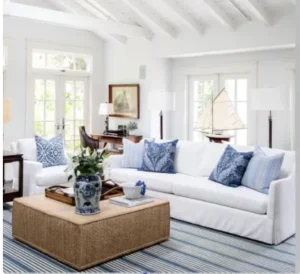
Style it with colorful striped throw pillows for a more traditional coastal look, or keep the whole setup in whites and creams if the room’s palette is already doing enough work elsewhere.
2. Driftwood Coffee Table
A driftwood coffee table brings in the kind of organic, weathered quality that makes a room feel like it has some history to it. The irregular grain and naturally varied texture of driftwood does what polished furniture simply can’t — it makes the room feel relaxed at a material level, not just a decorative one.
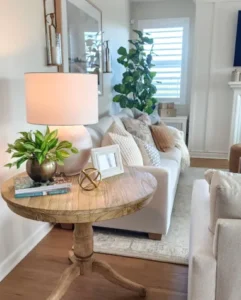
As the focal point of a seating area it anchors everything around it without competing with the rest of the room.
3. Ocean Blue Accents
The mistake most people make with coastal color is going too far — painting everything blue and hoping it reads as seaside rather than pediatric. The more sophisticated approach is using ocean blue as an accent against a largely white or neutral base.
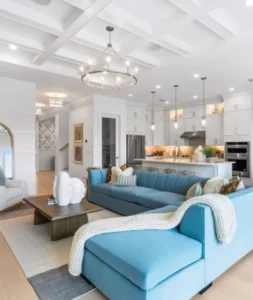
Blue in the artwork, echoed in throw pillows, carried through a few decorative objects — the repetition creates cohesion without the room tipping into theme territory. Rich, saturated blues like navy or deep teal work just as well as lighter aqua tones depending on how much contrast the room can handle.
4. Woven Rattan Chairs
Rattan in a living room is one of those materials that immediately signals a relaxed, coastal sensibility without requiring anything else around it to make the point. Two woven rattan chairs flanking a coffee table or positioned near a window create a seating moment that feels genuinely unhurried.
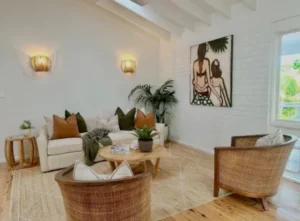
The natural color of rattan — warm and neutral — works with almost any palette, which makes it an easy addition to rooms that are still finding their direction.
5. Sheer Linen Curtains
Sheer linen curtains in a soft blue or natural undyed linen let light into a room in a way that heavier fabrics don’t — the light filters through rather than being blocked, which gives the room a soft, diffused quality that feels genuinely coastal. The fabric itself has enough texture to be interesting up close while staying quiet from across the room.
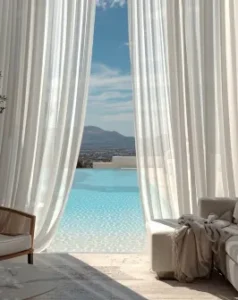
Hung close to the ceiling line and extending past the window frame on each side, these make windows look larger and walls look taller than they actually are.
6. Coastal Striped Pillows
Stripes are one of those patterns that have been associated with coastal style long enough that the connection feels inevitable rather than deliberate. Classic navy and white is the obvious version. But stripes in softer tones — sand, warm white, dusty blue — work just as well and feel more current than the nautical staple.
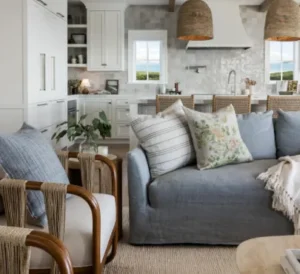
Pairing striped pillows with a modern abstract rug rather than a traditional braided or jute rug is the combination that keeps coastal style from sliding into nautical cliché.
7. Weathered Wood Beams
Exposed wood beams, real or faux, do more for a room’s coastal feeling than almost any other architectural element — they bring warmth and structural interest overhead in a way that flat ceilings simply can’t replicate. Painted white rather than left raw, they read as coastal rather than rustic, which is an important distinction if the room’s direction is light and airy rather than cabin-like.
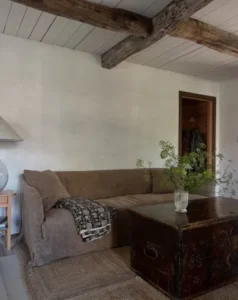
Carrying the same wood tone through to a fireplace mantel or built-in shelving creates the consistency that makes a room feel designed rather than assembled from separate decisions.
8. Nautical Rope Decor
Nautical rope has a tactile, organic quality that adds texture to a room without adding color — useful when the palette is already doing a lot of work. Rope woven into a wall hanging, wrapped around a vase, or formed into a decorative object introduces a material that’s genuinely connected to coastal life rather than just printed on something.
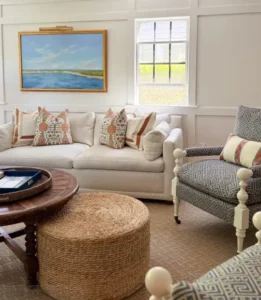
The DIY options here are worth considering if you want something specific — rope is easy to work with and the results tend to look more considered than purchased equivalents at a similar price.
9. Light Jute Rug
A jute rug brings in beachy texture through the floor, which is the surface most rooms treat as an afterthought. The natural fiber has a roughness and warmth that distinguishes it from synthetic alternatives even in photos, and in person the difference is significant.
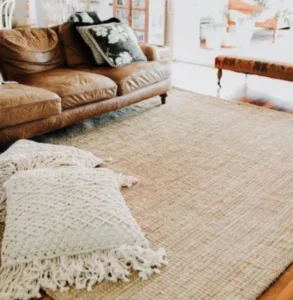
Light-colored jute brightens a neutral room rather than darkening it, which matters in spaces where the goal is airiness. Size matters too — a jute rug large enough that furniture sits on it anchors the room properly rather than floating in the middle of it.
10. Seagrass Storage Baskets
Seagrass baskets solve a practical storage problem while contributing to the room’s coastal aesthetic simultaneously — one of those rare cases where function and decoration align completely. They hold throws, pillows, extra blankets, remotes, the accumulated small objects that living rooms collect.
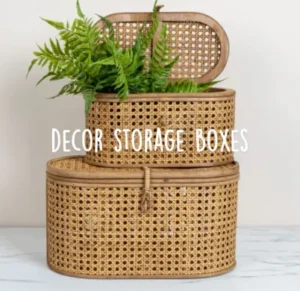
The woven texture reads as intentional rather than utilitarian, which makes them worth having out in the open rather than tucked away. A few in different sizes grouped together look like a considered collection rather than a storage solution.
11. Soft Sand Palette
A palette built around warm sandy neutrals — cream, warm white, light wood tones, soft beige — creates the calm that more obviously coastal color combinations sometimes sacrifice for personality. The sand palette works because it’s genuinely connected to the beach environment without announcing itself.
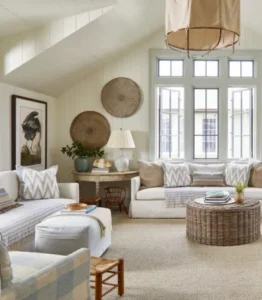
The key to keeping it from reading as beige-and-boring is texture: different surfaces with different qualities — linen, rattan, wood grain, woven fabric — give the eye enough variation that the restrained color palette feels rich rather than flat.
12. Coral Inspired Artwork
Abstract artwork that draws from underwater or coral imagery brings a coastal reference into the room without being literal about it. A painting that suggests the movement of water or the shapes of coral reads as sophisticated in a way that an actual painting of waves or a lighthouse doesn’t.

A muted light blue accent wall behind or near this kind of artwork gives it context without competing — the wall color sets the atmosphere, the artwork provides the focal point.
13. Blue Glass Vases
Seafoam, aqua, or clear blue glass on a mantel or shelf brings the color of coastal water into the room in a way that feels subtle rather than decorative. Grouped in odd numbers at varying heights, they read as a collection rather than individual objects. The transparency of glass adds something solid ceramics don’t — the way light passes through and around it changes throughout the day.
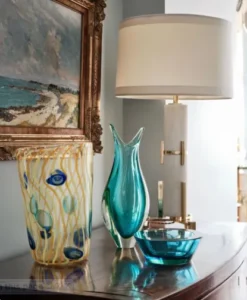
Beach decor doesn’t have to be kitschy, and well-chosen glass in coastal colors proves the point.
14. Shell Filled Bowls
A bowl of shells on a coffee table is the most direct coastal reference on this list, and done simply it works — a clear glass bowl, a ceramic bowl in white or natural tone, filled with shells collected rather than purchased if possible. The variety in shape and color within the shells provides enough visual interest that the container doesn’t need to do much.

Keep the rest of the coffee table simple so the bowl reads as a choice rather than one item in a crowded collection.
15. Shiplap Accent Wall
Shiplap has become synonymous with coastal and farmhouse design, and in a living room it does specific things nothing else quite replicates — it adds horizontal line and subtle texture to a wall, gives the room a slightly more architectural quality than flat painted drywall, and provides a surface that reads warmly whether it’s left natural or painted.
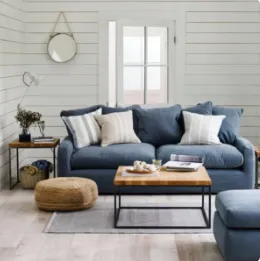
Painted in a soft seafoam or pale blue it becomes a feature wall that the whole room orients around. Painted white it contributes texture without color, letting other elements carry the coastal palette.
16. Breezy Neutral Sectional
A large sectional in a neutral — warm white, oatmeal, natural linen — provides the kind of generous, low-key seating that coastal living rooms are built around. The scale says come and stay a while. The neutral color doesn’t compete with everything else the room is doing.
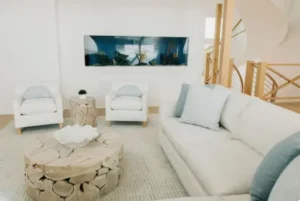
Layering texture through throw pillows and a woven area rug adds depth to what would otherwise be a lot of similar-toned fabric. The rug defines the seating area and brings pattern into the room without requiring the furniture to do that work.
17. Wicker Pendant Lighting
Wicker or rattan pendant lights add texture overhead in a room that often only gets considered at eye level and below. The woven material casts interesting shadows when lit from inside, and the organic shape softens rooms that might otherwise feel too clean or structured.
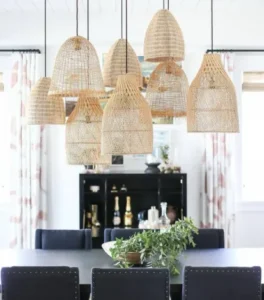
A pair of wicker pendants over a seating area or coffee table does more for the room’s coastal atmosphere than most decorative purchases at the same price. They work particularly well against shiplap or alongside other natural materials in the room.
18. Beachy Gallery Wall
A gallery wall in a coastal living room works best when it has a clear anchor — one larger piece that everything else supports rather than a collection of similarly sized objects competing with each other. Coastal-themed art, maps, photographs of the ocean, nautical objects integrated into the arrangement — the specificity of the theme creates cohesion even when the frames don’t match.
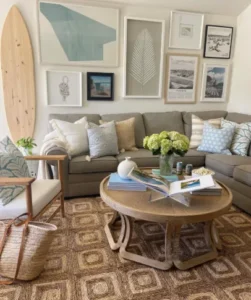
Blue and white as the dominant colors within the artwork ties the gallery to the room’s palette and prevents it from reading as a separate project rather than part of the room’s whole design.
19. Palm Leaf Prints
Palm prints — in fabric, wallpaper, or artwork — introduce a tropical quality that differs slightly from the more restrained coastal look but works well in rooms that want more personality. The boldness of the pattern means a little goes a long way: an accent chair in palm print, a pair of pillows, or a single large framed print makes the point without overwhelming the room.
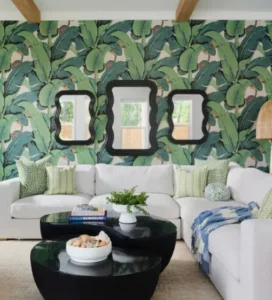
The approach that tends to work best is using palm prints in one application and keeping everything else subdued — the print is the room’s statement, not its background.
20. Natural Bamboo Blinds
Bamboo blinds filter light in a way that’s specific to their material — the gaps in the weave let in dappled light rather than blocking it entirely, which gives the room a warm, slightly organic quality throughout the day. They complement virtually every coastal palette and work alongside curtain panels in sheer linen if you want a layered window treatment.
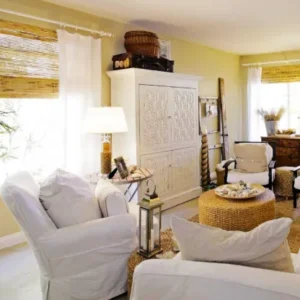
Extending the curtain rod past the window frame on each side — and hanging it closer to the ceiling than the window top — makes both the window and the room appear larger, which matters in rooms where natural light is already limited.
21. Open Airy Layout
The layout itself contributes to the coastal feeling as much as the objects in the room. Furniture pulled away from walls, seating arranged to feel generous rather than efficient, space to move through the room without navigating around things — this open quality is what makes coastal living rooms feel relaxed rather than decorated.
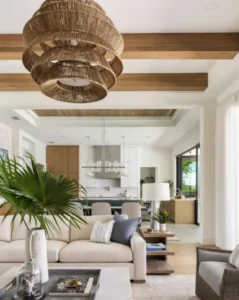
If the room opens to an outdoor space through large doors or sliding glass, the connection between inside and outside does more for the coastal atmosphere than anything decorative could.
22. Coastal Lantern Lighting
Lanterns — wood, wicker, or metal with a weathered finish — bring a specific kind of warm, ambient light to a living room that overhead fixtures and table lamps don’t replicate. On a coffee table as a pair, on a mantel, or flanking a sofa, they add visual weight and warmth simultaneously.
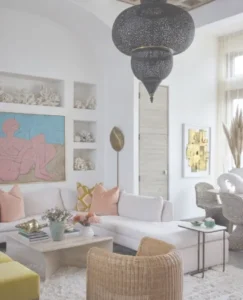
The weathered or natural finish is the part that makes them coastal rather than just decorative — the material quality connects them to the same organic, time-worn aesthetic that runs through driftwood, jute, and rattan throughout the room.
The thread that runs through all twenty-two of these ideas is the same: coastal style at its best doesn’t announce itself loudly. It comes from materials that connect to the natural world, colors that reflect light rather than absorbing it, and a general quality of ease that makes a room feel like somewhere you’d actually want to spend a slow afternoon. That’s achievable in any room — it’s just a matter of choosing the right elements and letting them do the work.