
The TV is usually the first thing people look at when they walk into a living room, which makes the unit it sits on — or the wall it hangs against — one of the most important design decisions in the whole space. Get it right and the room has a clear focal point that everything else can build around. Get it wrong and there’s this awkward black rectangle just floating on the wall with wires trailing down to a console that doesn’t quite fit.
TV Unit Ideas for Your Living Room
These 25 ideas cover everything from low-budget floating shelves to full media walls — with enough variety that there’s something here regardless of your style, your space, or how much you want to spend.
1. Floating Walnut TV Unit
Warm walnut wood mounted directly to the wall, with the TV sitting above it, creates a setup that feels cohesive rather than like two separate objects in the same space. The floating design keeps the floor visible underneath, which makes the room read as more open than it actually is.
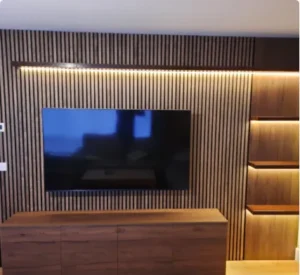
Two open shelves on either side of the TV handle display items, and drawers below handle the things you’d rather keep out of sight. Soft-close hardware is worth specifying if you’re having anything custom made — it’s a small detail that makes daily use feel noticeably more considered.
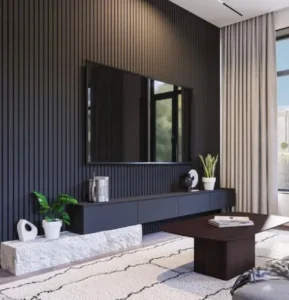
2. Matte Black Panel Backdrop
A matte black panel behind the TV serves a few purposes simultaneously. It hides cables and mounting hardware, creates a visual frame that makes the TV look intentional rather than just stuck to the wall, and provides a surface for floating shelves and decorative items that would otherwise feel unanchored.
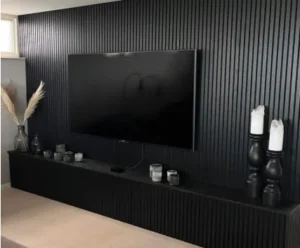
The contrast between a matte black backdrop and white shelves is one of those combinations that photographs well and looks even better in person. Pops of color in the accessories — plants, ceramics, a few books — stand out much more against black than they would against a neutral wall.
3. Marble Slab TV Wall
Marble as a TV wall backdrop is unambiguously luxurious, and when it includes a built-in fireplace the effect is genuinely dramatic. A wood panel mounted within the marble that can slide to reveal the fireplace gives the setup flexibility — TV visible when you want it, fireplace as the focal point when you don’t.
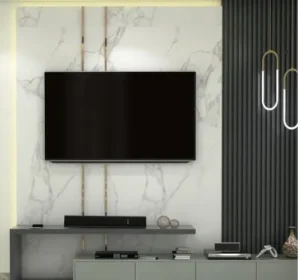
White marble against a black fireplace insert and television, with warm metal accents pulling the look together — this is the kind of feature wall that defines the entire room around it rather than just housing one element.
4. Built-in Shelving Surround
Building the TV into a custom shelving surround that also incorporates a fireplace is the solution for anyone who has both and doesn’t want either to feel like an afterthought. The TV on a swing arm that can be pushed back into the shelving when not in use is practical in a way that fixed mounts aren’t — it disappears when you’d rather look at the fire.
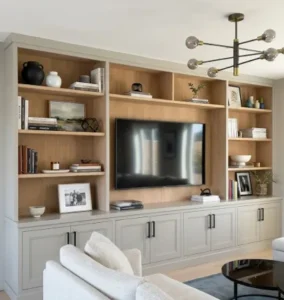
Custom shelving like this takes time and budget but produces the most tailored result of anything on this list. The shelves can be designed around exactly what you own and how you actually use the space.
5. Minimal White Lacquer Console
A floating white lacquer console is the choice for a genuinely minimalist room — the wall-mounted design and clean reflective finish make it look almost like part of the wall rather than a piece of furniture sitting in front of it. Drawers handle storage without adding any visual bulk to the room.
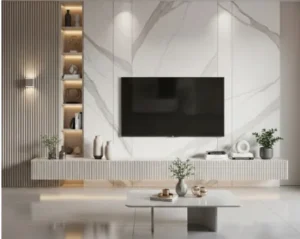
This works best in rooms with a controlled color palette and very little visual clutter elsewhere. In a room already doing a lot, a lacquer console can feel cold. In a restrained room with good light, it looks quietly expensive.
6. Ribbed Wood Panel Unit
Wood ribbing — vertical channels carved or molded into the panel surface — adds texture and visual interest in a way that plain wood doesn’t. The shadow lines created by ribbing change throughout the day as light moves, which gives the wall a subtly different quality at different times.
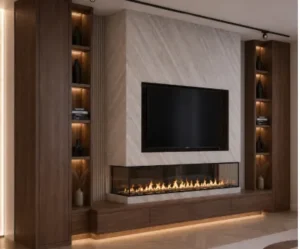
Paired with sleek black cabinet fronts and a wall-mounted TV, ribbed wood paneling reads as contemporary without being cold. The texture does enough visual work that the rest of the setup can stay simple.
7. Glass-Front Cabinet Base
Glass-front cabinets strike a balance between open shelving and fully closed storage — contents are visible and protected at the same time. Things you want to display stay in view, things you don’t want on show can be arranged neatly inside without being exposed.
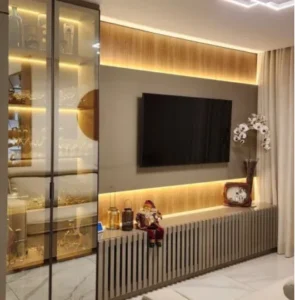
A simple white cabinet with glass fronts flanking the TV has a lightness to it that solid doors don’t. The floating wall-mounted design adds to that. This works particularly well in rooms where the rest of the furniture is fairly substantial — it keeps the TV wall from competing visually.
8. Concrete Textured Media Wall
Exposed concrete or concrete-effect texture as a TV backdrop creates a specific kind of industrial warmth that most other materials don’t. It’s textural, it doesn’t compete with anything placed against it, and it has a raw quality that suits certain rooms extremely well.
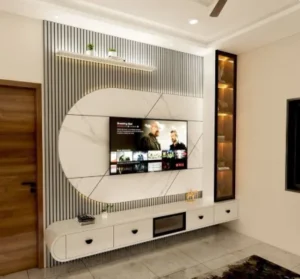
Black floating shelves against concrete texture, with the TV centered and a soundbar mounted directly below it — simple, graphic, and considerably more interesting than a plain painted wall. The color and artwork placed on the shelves do the work of softening the rawness of the concrete without losing what makes it compelling.
9. Backlit TV Panel Glow
LED backlighting behind a TV unit panel creates ambient lighting that serves a practical purpose beyond aesthetics — it reduces the contrast between the bright screen and the darker room behind it, which makes extended viewing noticeably more comfortable on the eyes.
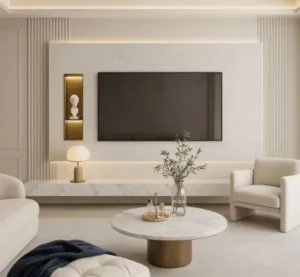
Two floating shelves on either side of the panel balance the composition and give the backlit panel a frame that makes it look intentional. This setup works particularly well in rooms used primarily for evening viewing, where the glow creates the right kind of atmosphere.
10. Low-Profile Oak Cabinet
A low-slung oak cabinet with a sliding door that conceals the TV when not in use solves a specific problem: the room has a television but doesn’t always want to look like it. Sliding the door across transforms the cabinet from entertainment unit back into a clean piece of furniture.
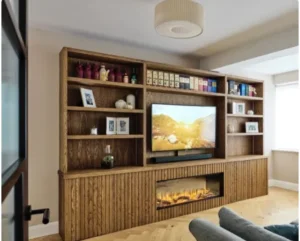
White wall behind dark wood creates a simple contrast that lets the cabinet read clearly without competing with anything else. This is the solution for rooms where the TV is one element among several rather than the definitive focal point.
11. Industrial Metal Frame Unit
A black metal frame with glass shelves has a lightness and openness that solid wooden units don’t — the frame itself takes up visual space but the shelves are transparent, so the overall effect is more airy than its footprint suggests. The metal frame echoes other metal accents in the room, and when that’s well-coordinated the unit feels integrated rather than placed.
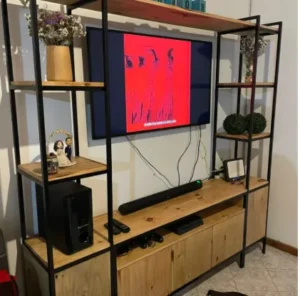
Light wood flooring and pale gray walls are the natural context for this — the contrast between industrial metal and warm organic materials is where this particular aesthetic earns its reputation.
12. Neutral Niche TV Wall
Recessing the TV and its surrounding display into a built niche — either built out from the wall or carved back into it — creates a sense of depth that a flat wall mount doesn’t have. The TV sits inside the space rather than on the surface of the wall, which makes it feel more architectural.
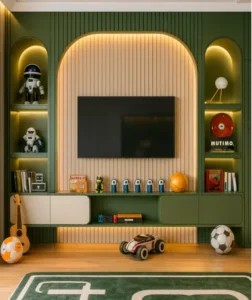
White walls and a white niche with wall sconces flanking the TV on each side push the elegance without going dramatic. Balanced artwork on the opposite wall completes the composition, making the room feel considered in both directions.
13. Hidden Storage TV Console
A full wall of built-in cabinetry with the TV recessed at the center is the maximum storage solution — floor-to-ceiling capacity disguised as a built feature rather than obvious storage furniture. The combination of open shelves for display and closed cabinets for everything else gives the wall visual interest while keeping daily clutter completely out of sight.
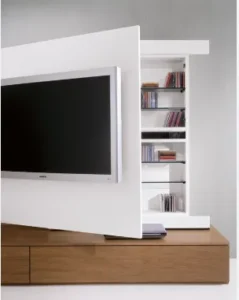
This works best in rooms where storage is genuinely a problem rather than just a nice-to-have — the investment in a full wall of built-ins is significant, and it justifies itself when the alternative is furniture scattered around the room trying to handle the same load.
14. Scandinavian Light Wood Unit
Light wood, white walls, and restraint in the accessories — this is Scandinavian design in practice. The TV unit floats at a height that works for seated viewing, the shelves keep things airy rather than loading them with objects, and the consistency of the wood and white palette carries through the rest of the room.
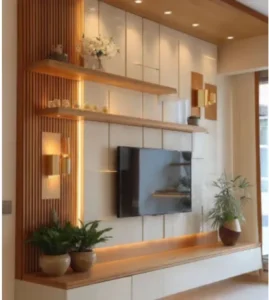
The calming effect of this approach comes from what’s not there as much as what is. No dark accents competing with the light wood, no pattern breaking the calm, nothing on the shelves that doesn’t earn its place.
15. Charcoal Wall-Mounted Cabinet
A long cabinet in deep charcoal running the width of the wall, with a floating shelf above the TV, uses color as the main design tool rather than form or texture. The dark cabinet against white walls is a high-contrast combination that makes the TV wall a clear focal point.
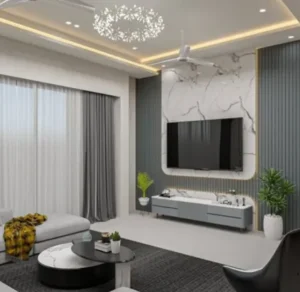
Warm wood flooring underneath softens the combination and prevents it from reading as stark. This is the choice for a room that wants some drama without committing to a full dark or moody palette.
16. Stone Veneer TV Backdrop
Stone veneer applied to the TV wall creates the visual weight of a stone wall without the structural implications of actual stone. When balanced with a sleek white media unit at the base and clean built-in shelving on each side, the combination reads as modern rather than rustic.
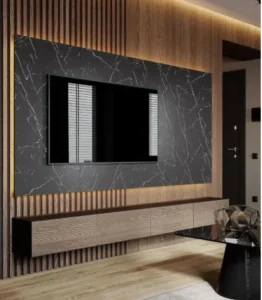
Neutral accessories with pops of green — plants especially — prevent stone from feeling too heavy. This approach works well in rooms that want warmth and texture without abandoning a contemporary overall aesthetic.
17. Curved Edge Media Console
Rounded corners on a media console soften a room in a way that angular furniture doesn’t. A white curved-edge unit sits quietly — it doesn’t demand attention the way a dramatic backdrop or dark cabinet would — and contributes to the contemporary feel of a room without overpowering it.
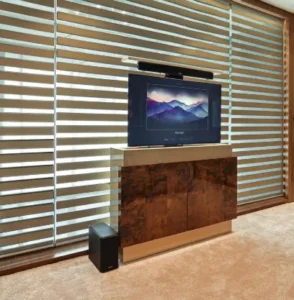
Open shelves on the sides for display, closed storage below for equipment, wall-mounted for that floating effect. The curve is the detail that makes this feel slightly different from the standard version of the same basic idea.
18. Dual-Tone Cabinet Design
Using two colors in the same cabinet unit — lighter below, darker above, or the reverse — adds visual complexity to what would otherwise be a single block of color. The different tones break up the wall in a way that makes the unit feel more dynamic than a single-finish approach.
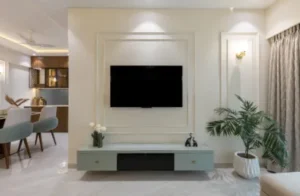
Lighter lower cabinets keep the base of the room feeling open. Darker upper elements draw the eye up and create an impression of height. This is a kitchen cabinet technique that translates naturally to TV units for exactly the same visual reasons.
19. Open Shelf Styling Unit
A TV unit built around open shelving is only as good as the styling discipline behind it. The things that make it work: mixing heights within each shelf rather than lining everything up at the same level, leaving deliberate empty space so individual objects have room to register, using a consistent color palette across the objects rather than treating each shelf as a separate composition.
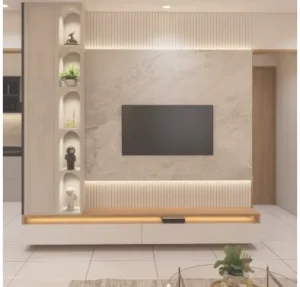
Plants, books, and decorative objects together — no single category dominating. The TV becomes one element within a larger styled moment rather than the thing everything else has to accommodate.
20. Floor-to-Ceiling Media Wall
A wall that does everything simultaneously — TV, fireplace, built-in shelving, closed storage — is ambitious and, when well-executed, genuinely impressive. The key is hierarchy: the TV and fireplace as equal focal points, the shelving as supporting structure rather than competing with them, the color doing the work of tying it together rather than each element going in its own direction.
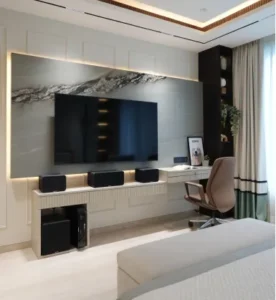
Deep navy behind the fireplace and TV, stone accent framing both, built-in shelves in the same tone on each side — this kind of consistency is what makes a complex wall read as designed rather than assembled.
21. Soft LED Strip Lighting
LED strips installed behind or beneath a TV unit do something that no other affordable lighting addition can: they make a flat wall three-dimensional. The glow around the unit creates depth, warms the room at night, and makes the TV feel intentionally placed rather than just hung.
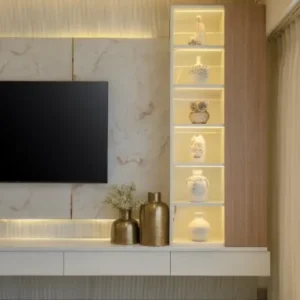
Controlled by remote or smart home system, this is also one of the more practical lighting investments in a living room — dimmable ambient light that’s always in the right position relative to the screen, without any of the glare that overhead lighting creates.
22. Textured Wallpaper TV Frame
Applying textured wallpaper in a rectangular panel slightly larger than the TV creates a frame that makes the television look more like a deliberate piece of the room’s design and less like technology that had to go somewhere. The wallpaper panel gives the TV a visual context it doesn’t have on a plain wall.
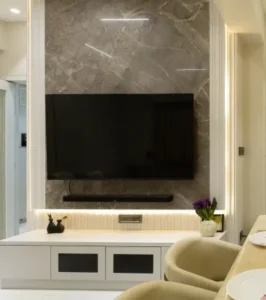
This works best with wallpaper that has enough texture or pattern to be interesting up close but reads as a coherent backdrop from across the room — grasscloth, geometric embossed patterns, or a dark moody print all work well depending on the room’s overall direction.
23. Floating Shelf Stack Unit
Stacked floating shelves arranged around the TV to create a cubby effect gives the television a similar visual treatment to a built-in without any of the carpentry involved. The TV sits within a cluster of shelves rather than on an isolated piece of furniture or flat against an empty wall.
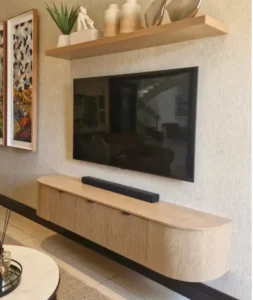
Dark colors work particularly well here — the depth and contrast make the shelving arrangement look more intentional and the mix of textures (wood, marble, glass, velvet) adds luxury that doesn’t depend on high budget.
24. Classic Paneled TV Wall
Shaker-style paneling on the TV wall is the choice for anyone whose aesthetic runs more traditional or farmhouse. White paneling with a dark wood TV panel recessed within it — the contrast between the white paneling and the dark wood insert gives the whole wall definition without anything feeling out of place in a classic room.
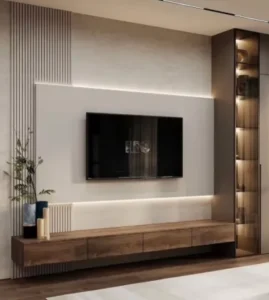
Built-in open shelves on each side and closed cabinets below handle practical storage while maintaining the tailored look. The TV panel ties to the wood floor and pulls the room together vertically.
25. Compact Corner TV Unit
Corners get wasted in most living rooms. A compact TV unit built into or designed for a corner turns what’s usually dead space into a genuinely functional and visually interesting arrangement.
A mix of wood and metal in the unit adds modern character. Wall-mounting the TV within the corner setup keeps the floor open and makes the space feel less compressed than a freestanding corner unit would. This is particularly useful in smaller living rooms where the TV doesn’t have a wall to itself and needs to share a corner without dominating the whole room.
The right TV unit for any room depends more on the room than on the unit itself — how much storage the room needs, how much visual weight the wall can handle, whether the TV is the primary focal point or one element among several. Any of these 25 approaches can work; the question is which one suits the specific space, the existing furniture, and how the room actually gets used day to day.