
A hundred dollars sounds like almost nothing when you look at home decor prices. A single throw pillow at a chain home goods store can run $40. A decent lamp starts at $60. An area rug that doesn’t look cheap? You’re already over budget before the room feels any different.
But that framing — comparing $100 to retail prices — is exactly the wrong way to think about it. The homes that actually feel beautiful, the ones where you walk in and something just feels right, rarely got that way through retail spending. They got that way through intentional choices, creative sourcing, and knowing what actually changes how a room feels versus what just adds more stuff to it.
Here’s what that looks like in practice.
The Step That Costs Nothing and Matters Most
Before a dollar gets spent, go through your home and edit ruthlessly. Not tidy — actually remove things. Anything that drifts in without contributing, anything kept out of guilt rather than genuine liking, anything broken or faded or simply taking up visual space without giving anything back.
Then rearrange what’s left. Move furniture. Try different configurations. Bring things from other rooms that might work better somewhere else. Look at what the room looks like when it’s not crowded with accumulated stuff.
Most rooms that feel aesthetically unfocused aren’t actually lacking decoration. They’re drowning in it. The edit reveals what’s there — and frequently reveals a room with genuinely good bones that was hidden underneath.
Do this first. Then make a specific list of what the room actually still needs. That list is your shopping guide. The $100 goes toward those specific gaps, not a general sweep of the home decor section.
Where to Concentrate the Budget
The question of whether to transform one room completely or improve several rooms a little is worth deciding deliberately rather than defaulting to spreading money thin.
For most people, concentrating the full $100 on one room produces a more satisfying outcome. A room that’s meaningfully better is more noticeable and more enjoyable to live in than four rooms that are each slightly improved. Pick the room you spend the most time in, or the one whose current state bothers you the most, and put everything toward that space.
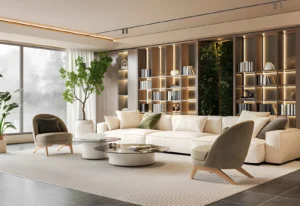
The alternative — $20 to $30 per room across several spaces — makes sense if multiple rooms are at a similarly discouraging baseline and need one high-impact change each. In this case, the one change per room needs to be chosen specifically for maximum visible return per dollar, not spread across multiple small purchases that add up to nothing significant.
The Thrift Store — Nothing Else Comes Close for This Budget
A thrift store visit with a specific list is the highest-leverage thing on this list by a significant margin. The key word is specific. Walking in to browse generally and walking out with random objects that seemed promising at the time produces a more cluttered home, not a more beautiful one.
Walk in knowing exactly what you’re looking for — a large mirror for the entryway, a lamp with a good base shape, vases in a specific size, picture frames in a consistent finish. These are the categories thrift stores carry reliably and where the price-to-quality ratio is genuinely remarkable. An ornate mirror that would cost $200 at a home goods store shows up at a thrift store for $15 to $30. Lamp bases with ugly shades — the shade being the cheapest and easiest thing to replace — appear constantly.
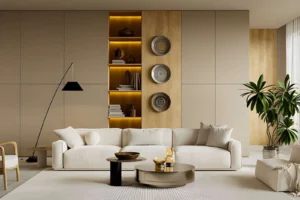
A $30 thrift store run with a focused list regularly produces three to five decorative objects that, arranged intentionally, change a room completely. Nothing else on this list delivers that ratio.
Plants — The Thing That Changes How a Room Feels
Not looks. Feels. There’s a specific quality that well-placed plants bring to a room — warmth, aliveness, something organic in an environment that’s otherwise all hard surfaces and manufactured materials — that no amount of styling achieves without them.
A trailing pothos on a high shelf, a snake plant beside a sofa, a peace lily in a corner — these don’t just add visual interest. They make a space feel genuinely inhabited and cared for in a way that’s hard to replicate otherwise. $15 to $25 of this budget going toward two or three medium plants, in attractive pots you already own or find at a thrift store, is probably the single best allocation available.
The plants worth starting with if you don’t have a track record: pothos (trails well, genuinely hard to kill), snake plant (architectural and tolerates low light), ZZ plant (glossy deep green leaves, very drought tolerant). All three handle neglect gracefully and look good doing it.
A Large Mirror — Space and Light for $20 to $40
A well-placed large mirror does two things simultaneously that nothing else on this list can: it reflects available light deeper into the room and it creates the visual impression of more space. In a small room this can be genuinely dramatic — a mirror opposite a window effectively doubles the apparent depth of the space.
Thrift stores are reliably the best source. An ornate frame can be spray painted gold, black, or white in an afternoon if the original finish doesn’t suit the room. Placement matters as much as the mirror itself — opposite a window, in an entryway, or as the focal point above a console table.
Throw Pillow Covers — $15 to $30 for a Sofa That Feels New
Pillow covers rather than whole pillows — the inserts you already have still work, the covers are what create the visual change. Two or three new covers in the right colors can make a sofa that’s been in the same spot for years feel like it was just added to the room.

The specific power here is color and texture — the covers change the palette of the whole seating area, which changes how the room reads. Pillow covers at this price point are available from Amazon, Target, and H&M Home, and they’re swappable seasonally without replacing anything structural.
Candles — $10 to $20 for Atmosphere You Can Actually Feel
The argument for candles as a budget decoration priority isn’t just visual — it’s the fact that a home that smells good feels more welcoming in a way that no visual change replicates. Candles do both things at once: they look good clustered on a tray and they change the atmosphere of the room when lit.
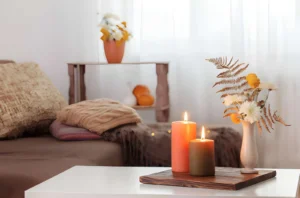
Two or three candles in a warm, considered scent — something woody or vanilla-forward for winter, citrus or fresh linen for summer — grouped on a beautiful tray or plate you already own. The tray is the part that makes it look styled rather than random. Total cost: $10 to $20.
New Lampshade — $10 to $20 for a Lighting Mood Shift
Underrated almost universally, probably because it’s unglamorous. A new shade completely changes the character of a lamp — the shape, the material, and the color of the shade determine the quality and warmth of the light the lamp produces, which affects how the entire room feels when it’s on.
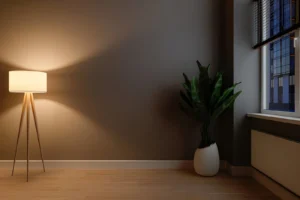
Especially useful in combination with a thrift store lamp find — a lamp base with a good shape and a terrible shade costs $5 at a thrift store, plus $10 to $15 for a new IKEA or Amazon shade equals a finished lamp for under $20 total that looks considerably more considered than the sum of its parts.
Gallery Wall — $10 to $20 for Frames
The photographs already printed but not displayed. Art prints saved and never hung. Postcards from trips. Pages from a beautiful calendar. Children’s drawings. All of these, gathered and framed consistently in matching frames, create a gallery wall that’s genuinely personal in a way that purchased art can’t replicate.
Matching frames in one finish — all black, all white, all natural wood — are available from IKEA for $2 to $5 each. A gallery of twelve frames for under $20, holding things you already love, creates a focal wall people comment on every time they visit.
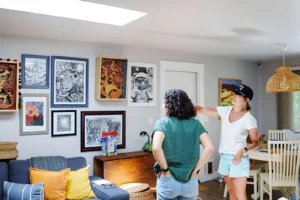
The one technique that separates gallery walls that look intentional from ones that look haphazard: lay the whole arrangement out on the floor and finalize it before a single nail goes into the wall. The spacing between frames is part of the design — leave more than feels natural.
Hardware — $15 to $25 for a Furniture Upgrade That Punches Above Its Weight
New knobs and pulls on one dresser or a section of kitchen cabinets does for furniture what jewelry does for an outfit. Matte black bar pulls read contemporary. Brushed brass reads warm and deliberate. Ceramic or porcelain knobs read cottagecore or farmhouse. The change is small in scale and immediately noticeable.
The budget constraint here means picking one piece of furniture or one section of cabinets — the most visible one — and updating that completely, rather than buying a few pieces for multiple locations that don’t add up to enough change anywhere to be noticeable.
Shelf Styling — Free to $15
A shelf styled with attention to height variation, negative space, and visual weight communicates intention. The same objects at uniform height without breathing room between them communicates clutter, regardless of how nice each individual object is.
Three principles that work consistently: vary heights (something tall, something medium, something low), leave empty space deliberately — it’s part of the design, not a gap to fill — and include one living element, a plant or small vase of something cut from the garden.
With the objects already in the house plus one or two thrift store finds, a shelf that felt like background noise becomes the most intentional-looking surface in the room.
How to Split the $100
A suggested allocation that covers the highest-return changes most effectively:
Thrift store run with specific list: $30. Plants and pots: $20. Throw pillow covers: $20. Candles on a tray: $15. Picture frames for a gallery wall: $15. Total: $100.
This transforms the living room — plants, pillow covers, gallery wall, candles — with the thrift store run covering whatever the assessment identified as the room’s most pressing specific need.
The Thing Worth Remembering
The most beautiful homes aren’t the most expensively decorated ones. They’re the ones where every object feels chosen rather than purchased, where the room reflects someone who actually thought about it, where the small decisions accumulated into something that feels genuinely lived-in and cared for.
A hundred dollars spent intentionally on the right things, in the right order, after editing and rearranging what’s already there — that’s not a consolation prize. That’s actually how it’s supposed to work.